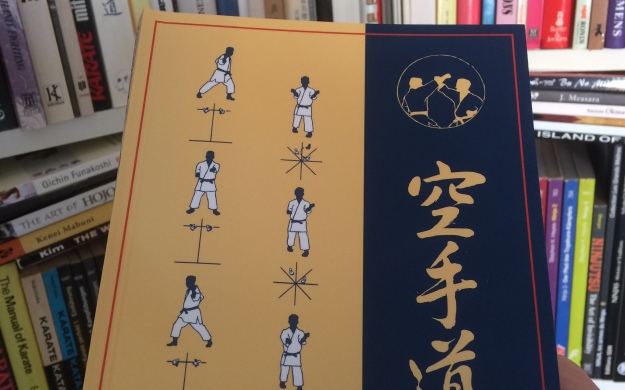
Heiko Bittmann has been one of the most important German experts in the teachings and history of karate, not least since his highly acclaimed German dissertation Karatedō. Der Weg der Leeren Hand (Karatedō. The Way of the Empty Hand) (1999). This was followed in 2000 by Die Lehre des Karatedō (The teachings of Karatedō), a condensed but no less readable version of his first work for “all those who are interested in Japanese culture in general and, within this, in the traditional ways of the martial arts in particular”. His book Geschichte und Lehre des Karatedō (History and Teachings of Karatedō) (2017) is now available in a revised and expanded new edition.
A new edition makes particular sense when new findings become available. Bittmann has revised his book from 2000 and added a detailed account of the history of karatedō – starting in the 14th century. Based on his own research and new research findings, he uses sources previously unknown in Western literature, such as the travel diary satsuyū kikō from 1801. With the help of numerous original sources, he also shows in a new chapter that weapons prohibition measures in Ryūkyū should be viewed in a more differentiated way and that these should not be seen solely as a reason for the development of indigenous fighting methods.
The history of karate has always been characterized by false assumptions, misunderstandings and misinformation. Fortunately, these are gradually being corrected on the basis of profound scientific efforts. Anyone wishing to keep up to date with the latest research into the history and teaching of karatedō should definitely read Bittmann’s new edition. Especially in German-speaking countries, there are currently not many good, well-founded works on karate that provide truly new insights. Bittmann’s book is definitely one of them and is therefore highly recommended.

 Investigations into the history of karate
Leave a Reply