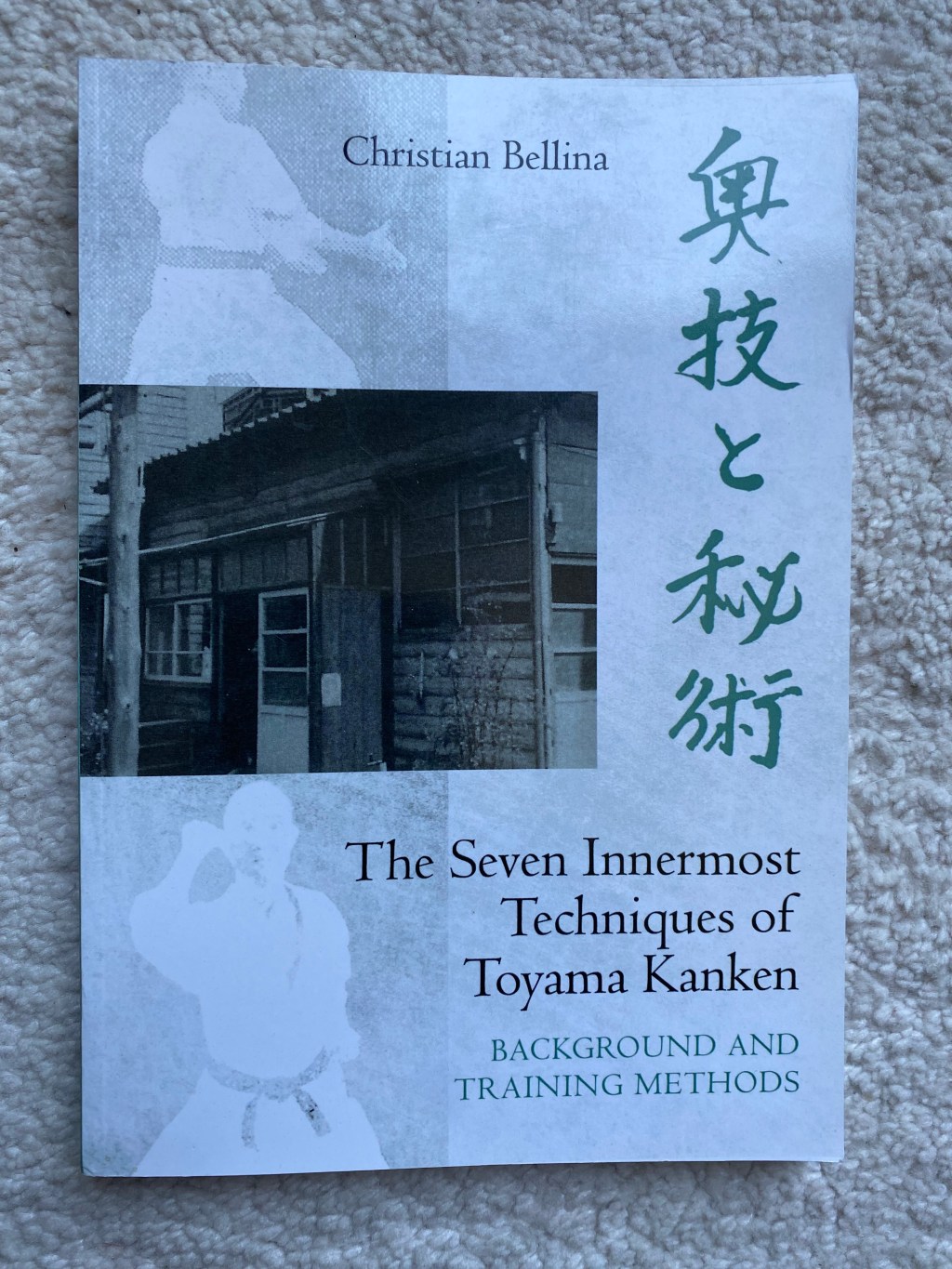
Tōyama Kanken (1888–1966) was a prominent figure in karate, having trained under masters such as Itosu Ankō (1831–1915) and Higaonna Kanryō (1853–1915). He founded the Shūdōkan dōjō in Tōkyō in 1930 and was instrumental in teaching and spreading karate in Japan. Despite his contributions, he remains less well known than contemporaries such as Funakoshi Gichin (1868–1957) or Mabuni Kenwa (1889–1952). Bellina’s work, such as his recommended book Toyama Kanken: The Heritage of Shudokan (2018), seeks to shed light on Toyama’s teachings and preserve his legacy for future generations.
With his book The Seven Innermost Techniques of Toyama Kanken: Background and Training Methods (2022), he adds to his efforts with another meticulously researched exploration of Tōyama Kanken and his lesser-known, advanced practices within traditional karate.
Beginning with a short biography of Tōyama Kanken, the book is divided into two main sections: The first section provides comprehensive descriptions, training methods and applications for each of Tōyama Kanken’s so-called seven techniques. The second section, a translation of an excerpt from Tōyama Kanken’s book Karatedō dai hōkan 空手道大宝鑑 (1960), provides the reader with direct insights from Tōyama himself, ensuring authenticity and a deeper understanding of the techniques’ origins.
For martial artists and enthusiasts interested in the deeper aspects of karate, Bellina’s book offers a unique perspective on advanced techniques that are rarely discussed. Combining historical context with practical training methods, it serves as both a tribute to Tōyama Kanken’s legacy and a valuable guide for serious practitioners.

 Investigations into the history of karate