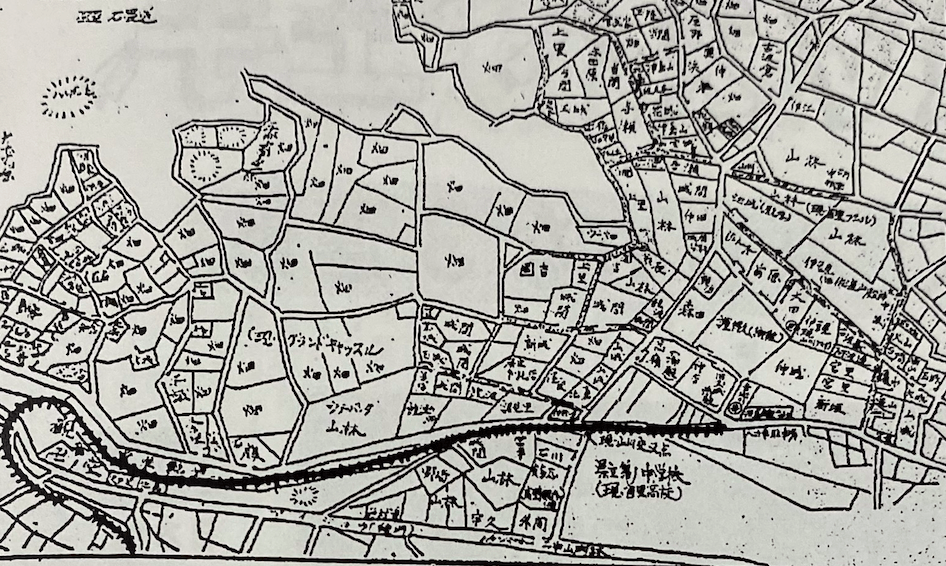
Yamakawa, a district in Shuri (Okinawa) just a few minutes’ walk from Shuri Castle, was once home to many aristocratic families—the scholar-officials of the Ryūkyū Kingdom. The neighborhood looked much like a traditional Ryūkyūan village, with both small and large houses that reflected the social status of their residents. The homes were wooden and single-storied, set within yards surrounded by stone walls about three meters (ten feet) high. Their style was similar to houses found on the Japanese mainland, often built from cedar with raised floors, tatami mats, and sliding paper screens.
Back in the day, Yamakawa carried the full responsibility for supplying paper to the royal Shō family. The task drew life from the Yamakawa Hījā (or Higawa), the communal spring whose clear waters fed the craft of handmade paper. Even after the war, papermakers continued to produce colored sheets and seaweed-fiber paper.
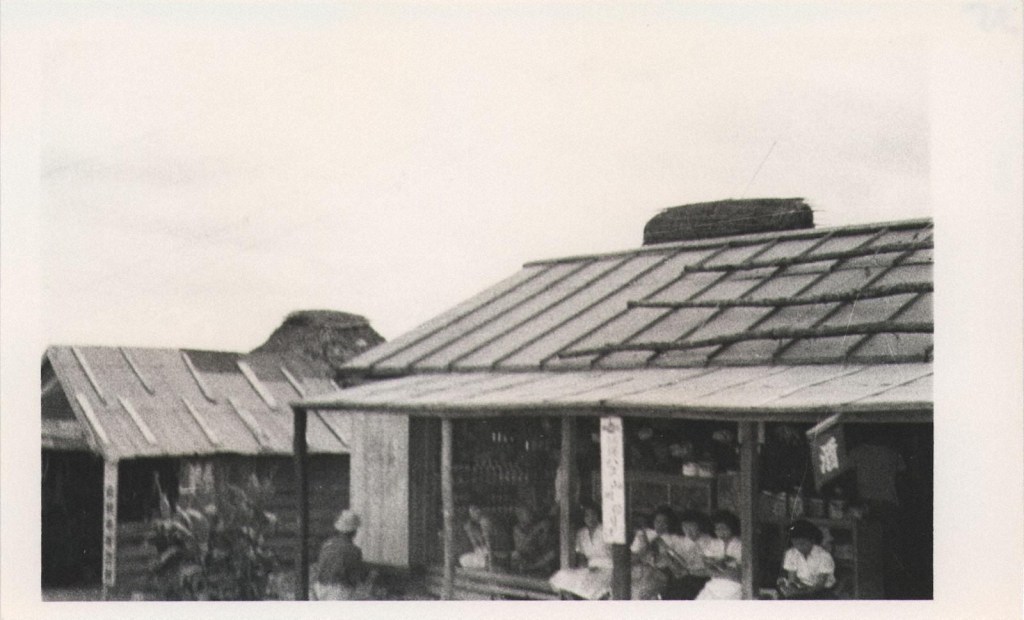
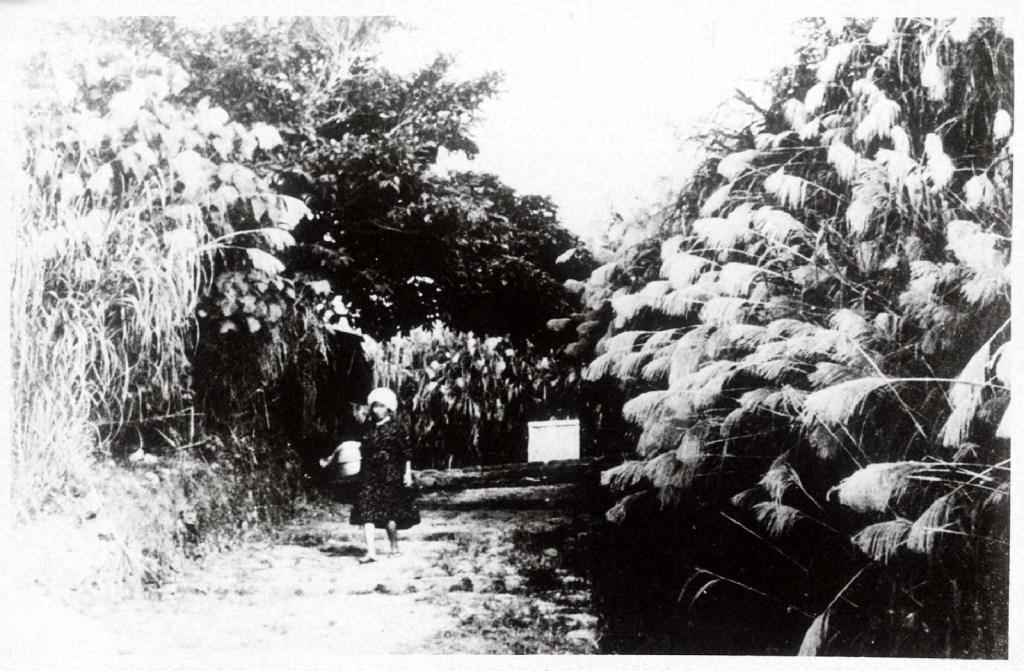
Snapshots from Yamakawa
(Courtesy of Naha City History Museum)
Records show that as early as 1839, papermaking was already underway sustained by the town’s abundant springs. Other industries also left their mark. Today, the landscape has changed so completely that even the locations of these places can no longer be pinpointed. Life in Yamakawa also revolved around its deities. The earth god Tōtēkū トーテークー was enshrined here, and ceremonies were held in the lunar New Year as well as the second and eighth months. Once a settlement of heritage and distinction, Yamakawa has grown quiet. With no successors to continue its industries or rituals, the traditions are now remembered only in fragments. The same certainly applies to karate.
Several leading karate adepts of the time came from this area. Among the most prominent were Matsumura Sōkon 松村宗棍 (c1809–c1899), Yabu Kentsū 屋部憲通 (1866–1937), and Hanashiro Chōmo 花城長茂 (1869–1945).
Yabu Ken’yō 屋部憲要, Kentsū’s grandfather, served as archery instructor to Lord Ikegusuku Anki 池城安規 (1829–1877), a popular statesman and official of the Ryūkyū Kingdom. His archery range is said to have been located directly behind the Yabu residence in Yamakawa. Tradition holds that the Yabu family lived right next door to Matsumura’s residence—a detail still spoken of within the family today. Against this backdrop, it comes as little surprise that the young Kentsū soon became a disciple of Matsumura—even after the elder master later moved to the Shikina-en garden, constructed at the end of the 18th century as the second residence of the Ryūkyūan kings. Stories tell of the boy’s persistence: he is said to have begged the veteran Matsumura, already in his mid-sixties, to accept him as a student from an early age. Yabu’s training began in the mid-1870s, around the same time he entered school.
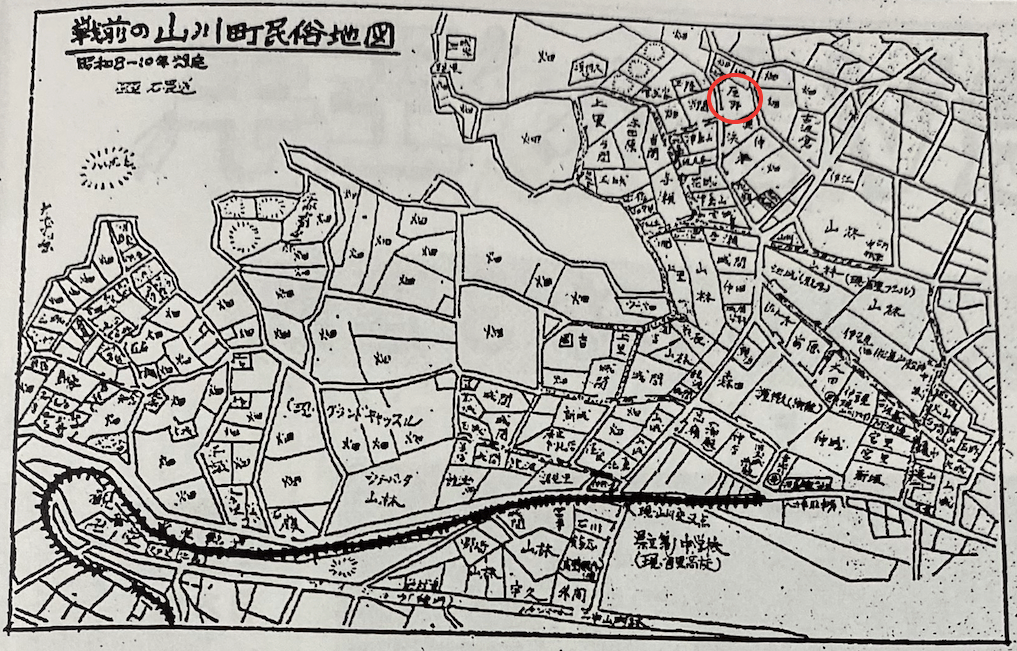
A hand-drawn map showing the layout of Yamakawa Town before the war based on residents’ memories; red circle indicates house of the Yabu family (Okinawa Times)
Many decades later, Yamakawa would also be the place where Yabu Kentsū spent his final days, passing away at his private residence on 27 August 1937 from a terminal illness. A memorial ceremony was held there, the next day from 5 to 6 p.m.
Today, Yamakawa is remembered as a place where several of Okinawa’s most renowned masters once lived their daily lives, raising families while quietly shaping the traditions they would pass on to the next generation.
Sources:
Feldmann, Thomas (2024): Yabu. The Untold Journey of an Okinawan Man. Lulu Publications
Okinawa Times (1976): 山川町。思い出のわが町 湧水が豊富だった。水神祭りでいにしえを語る Yamakawamachi. Omoide no waga machi. Yūsui ga hōfudatta. Suijin matsuri de inishie o kataru (Yamakawa Town. My town of memories. Abundant with spring water. The Water God Festival speaks of ancient times), Okinawa Times, 28 October
Additional information

 Investigations into the history of karate