When Yabu Kentsū 屋部 憲通 (1866–1937) returned from his time in North America (1919–1927) in the late 1920s, he was again employed at the Okinawa Shihan Gakkō (Okinawa Normal School) in Shuri, located not far from his home. At that time, he was one of the most senior karate masters in Okinawa and as a war hero widely recognized in local society. Although a younger generation had largely taken over instruction at the school by that time, Yabu still taught and directed karate classes there. Several recollections (and photographs) from this period have survived.
The group photograph
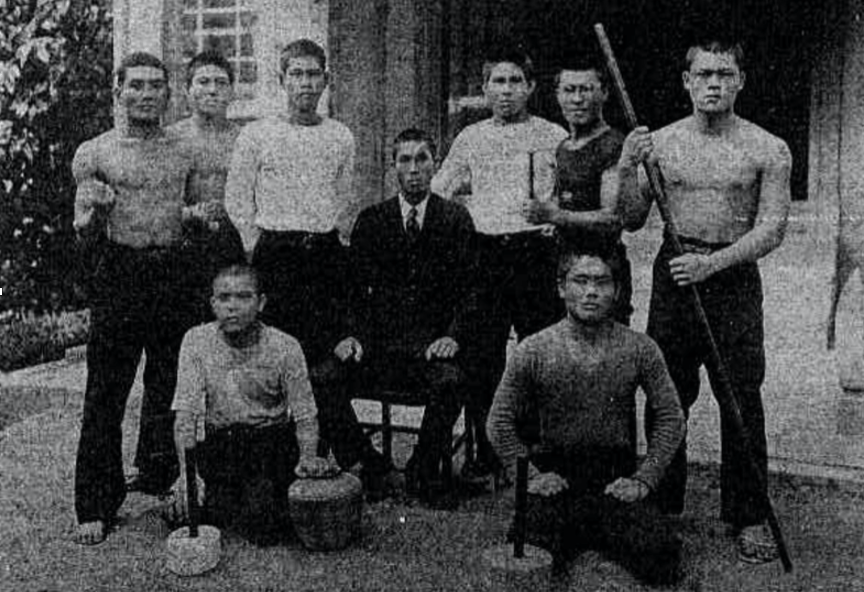
One particularly striking image is a group photo taken in front of the school. It shows Yabu seated in the center, surrounded by young karate students holding training equipment (補助運動 hojo undō) such as the strength-training tools chiishi (チーシー) and ishisashi (石錘). One holds a staff (棒 bō), another wears protective gear.
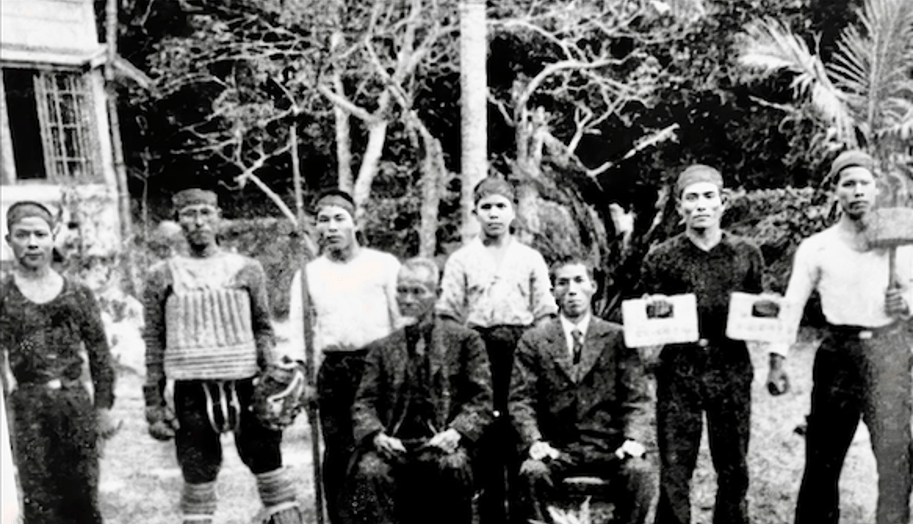
The photograph in question as used in Feldmann (2024: 327)
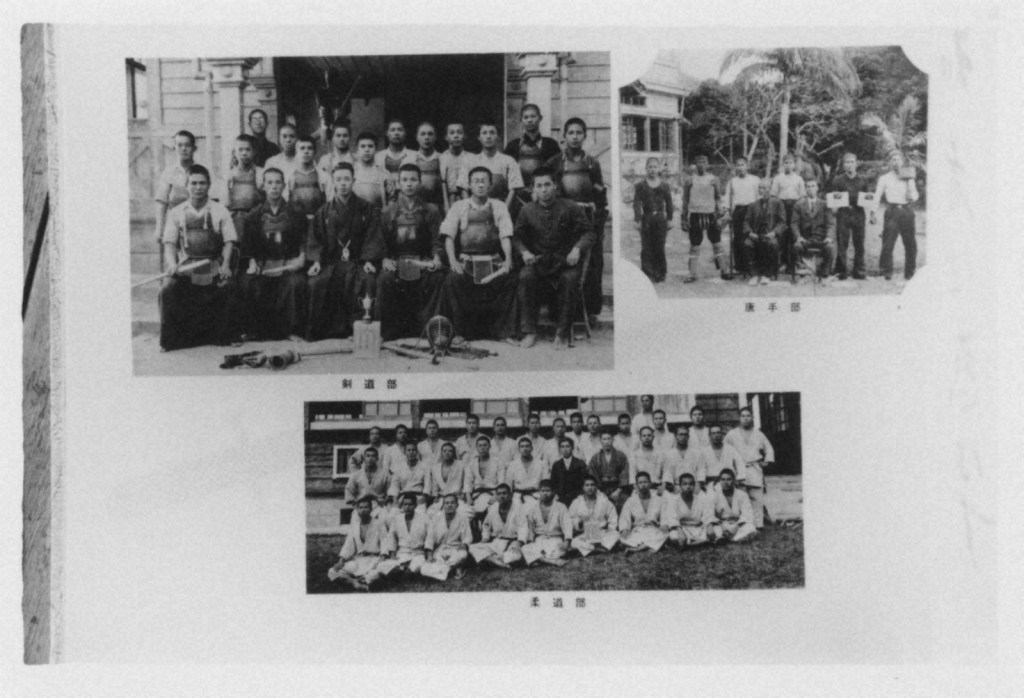
The photograph has appeared in various publications, but until now its precise source had remained unknown. Despite considerable efforts during the research for my Yabu biography, I had been unable to determine its origin. The individuals who had previously provided the image could no longer recall—or were unwilling to recall—its provenance (Feldmann 2024: 327). Thanks to the research of Patrick McCarthy, I am now pleased to be able to solve this puzzle: the photograph comes from the 1932 yearbook of the Okinawa Shihan Gakkō, which is available in full on the Nanjō Digital Archives website. It shows the graduation picture of the karate club. Yabu was in his mid-60s in the photo.
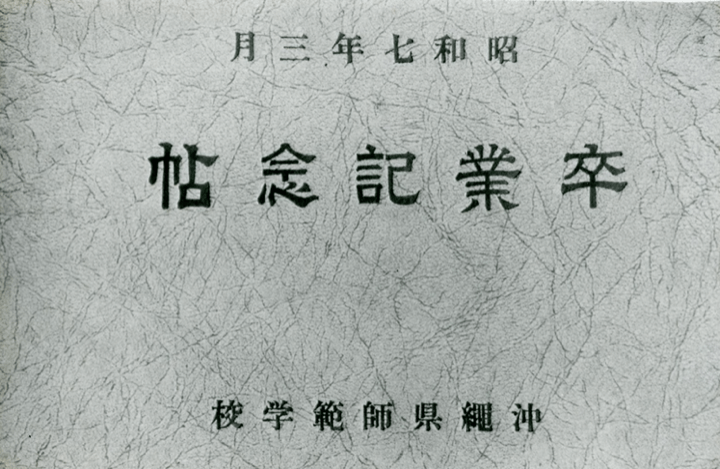
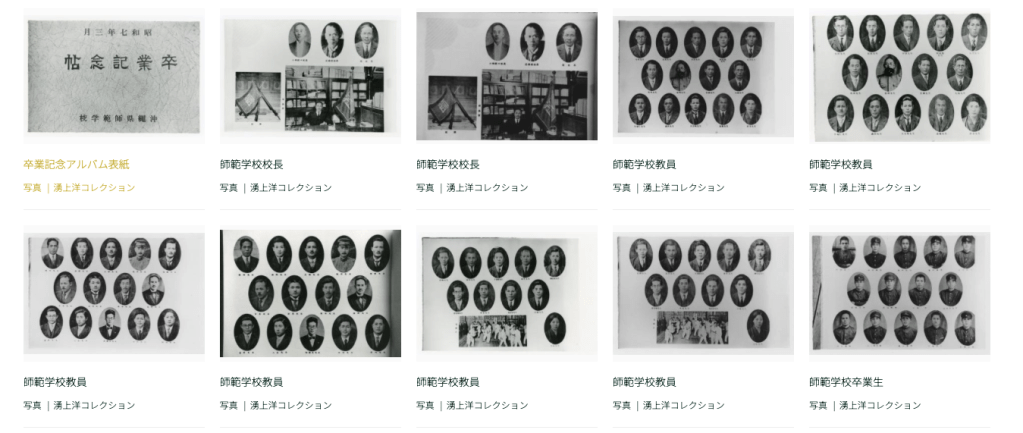
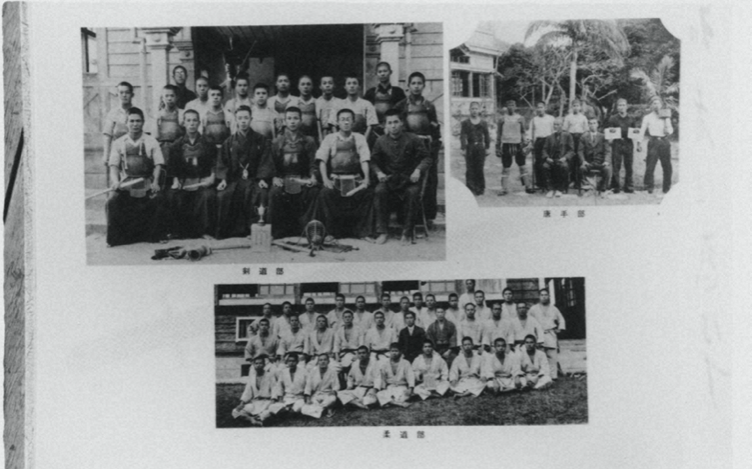
Selected pages of the Commemorative Album (1932)
Source: Nanjō Digital Archives
Yabu’s teacher colleague
At the same time, this makes it probably possible to identify the person sitting next to Yabu, who also appears in another karate group photograph (Feldmann 2024: 276). According to the present records, it is likely Mr. Ōwan 大湾, who was a member of the Shihan Gakkō faculty and probably served as an instructor for karate as well.
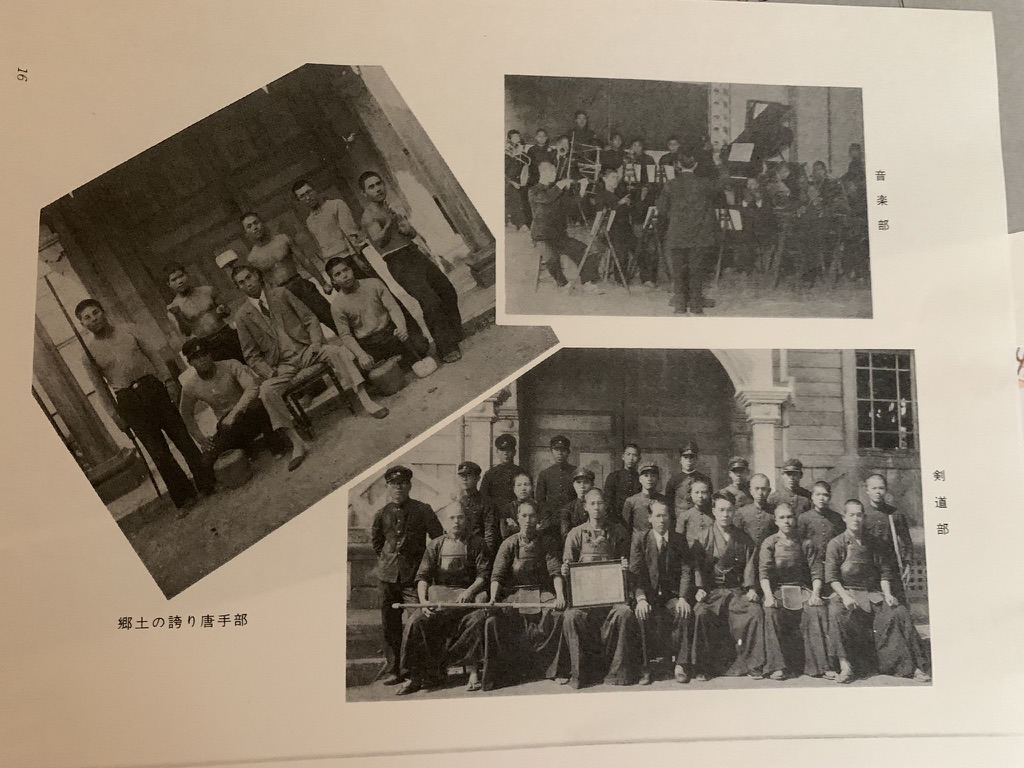
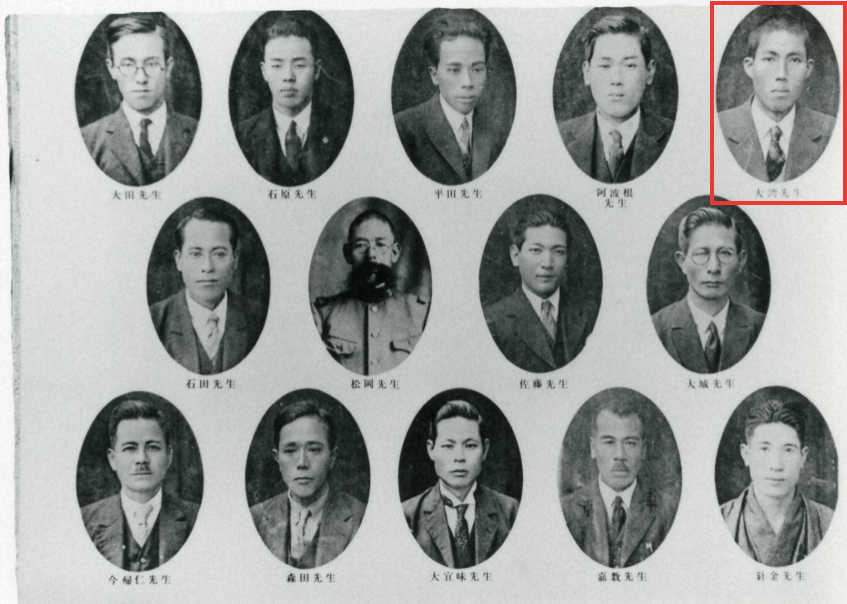
Commemorative Album (1932)
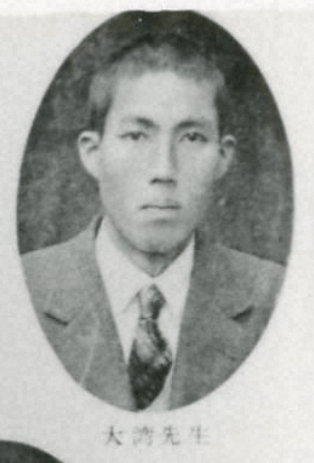
Source: Okinawa Shihan Gakkō/Nanjō Digital Archives
Deeper understanding made possible by a donation
The digitization of the Commemorative Album was made possible thanks to the donation of materials by Wakugami Hiroshi 湧上洋 in 2024. He was born on 1 January 1935 and raised in Funakoshi, Tamagusuku Village (now Nanjō City) and experienced the Battle of Okinawa at the age of 10. After the U.S. military began air raids and naval bombardment on Okinawa Island on 24 March 1945, prior to their landing, he and his family evacuated to Kanna, Kin Town (now Ginoza Village) (Ryūkyū Shimpō, 31 December 2024).
The album was owned by his father, Wakugami Kamasuke 湧上蒲助 (died in 1960), who graduated from the Shihan Gakkō in 1931. The Tamaki Village Funakoshi Journal (玉城村船越誌) described him as follows: “While attending the Shihan Gakkō, he excelled in jūdō, sumō, and swimming, and in his final year, he was a bright, lively, and good-looking young man who held a first-degree black belt [and] was captain of the jūdō club …” (Nanjō Digital Archives 2024).
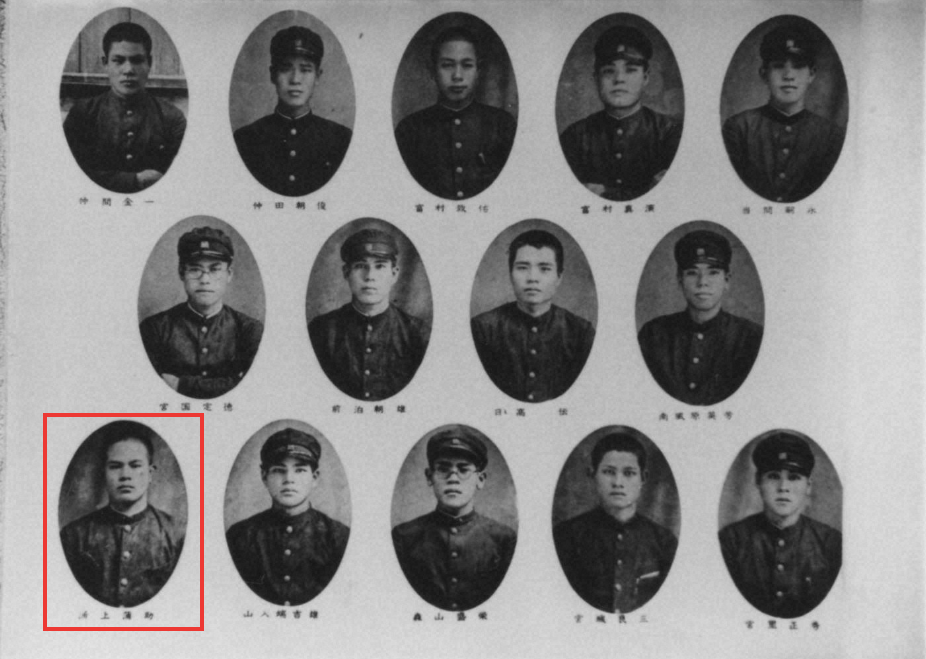
Page of the commemorative album with Wakugami Kamasuke (1932)
Fellow graduate Kyan Shin’ei
One of Wakugami’s classmates was Kyan Shin’ei 喜屋武眞榮 (1912–1997), who was member of the school’s karate club and karate student of Yabu. The Yabu family still spoke today about this connection. In the group photograph Kyan is likely standing second from right holding the ishisashi (石錘).
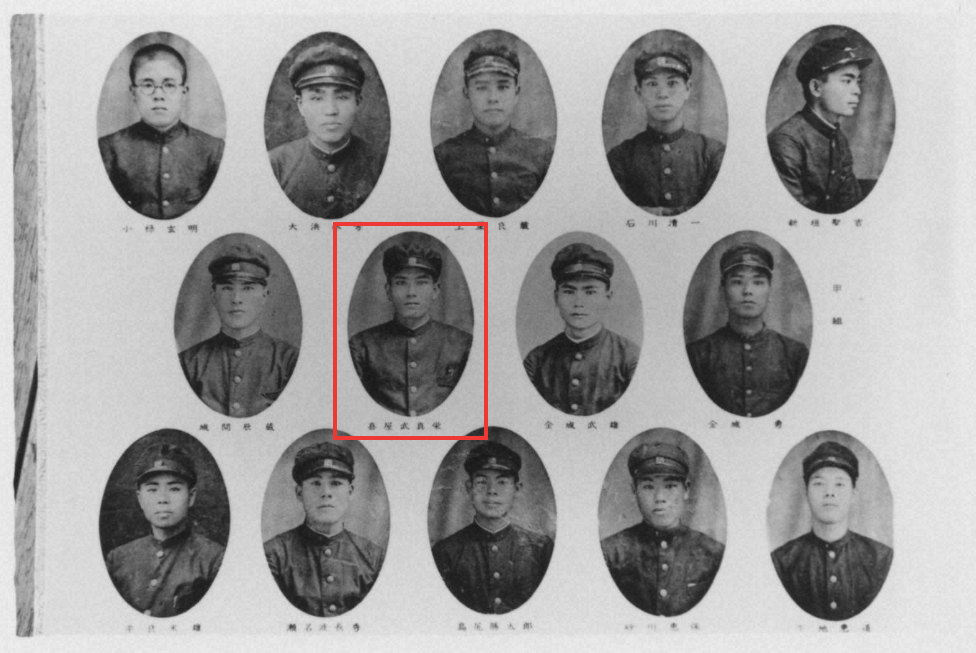
Page of the commemorative album with Kyan Shin’ei (1932)
Kyan would later become a respected kobudō practitioner who trained under Kina Shōsei 喜納昌盛 (1882–1981), himself also a student of Yabu. A portrait photograph of Kyan is likewise included in the book.
Today, Kyan is remembered as a Japanese educator, activist, politician, and martial artist. He spearheaded a movement, which sought to have Okinawa—then under U.S. military rule—returned to Japan. After reversion, he served five terms in the House of Councillors. As a candidate of the Okinawa Innovation Coalition, he became a symbolic figure of the progressive unification movement (Japanese Wikipedia).
I am sincerely grateful to Patrick McCarthy for sharing his discovery and encouraging me to explore its background and present it here.
Sources:
Feldmann, Thomas (2024): Yabu. The Untold Journey of an Okinawan Man. Lulu Publications
喜屋武眞榮 Kyan Shin’ei, Japanese Wikipedia
Okinawa Shihan Gakkō (ed.) (1933): 唐手部だより Karatebu da yori (Karate Club News), in: Ryūtan, October, pp. 161–162 (in Japanese)

 Investigations into the history of karate