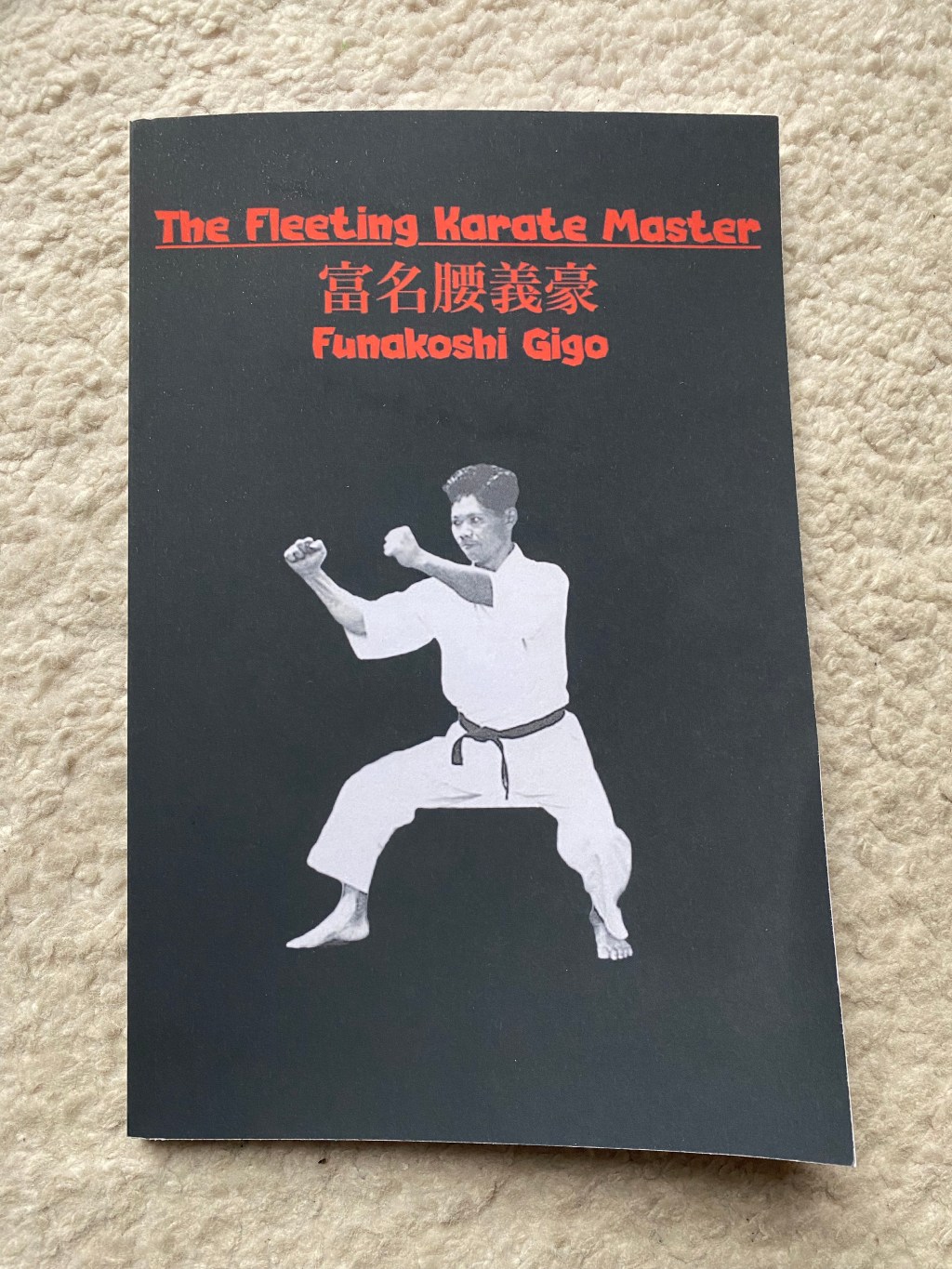
Eric Shahan, a highly accomplished translator known for his numerous English editions of classic Japanese martial arts texts—from ninjutsu and jūjutsu treatises to seminal karate works by masters such as Mabuni Kenwa and Motobu Chōki—once again delivers a remarkable contribution to the study of traditional martial arts. With The Fleeting Karate Master: Funakoshi Gigō, his newest work, Shahan turns his attention to one of the most enigmatic and often overlooked figures in modern karate history: Funakoshi Gigō (or Yoshitaka) 船越義豪 (1906–1945), the third son of Funakoshi Gichin 船越 義珍 (1868–1957).
While Funakoshi Gichin’s name dominates virtually every narrative of karate’s development in prewar Japan, his son Gigō remains a shadowy presence—acknowledged as a technical innovator, yet rarely discussed in depth. This volume stands out as the first English-language publication containing translations of four original Japanese texts authored between 1939 and 1941 by Gigō himself, alongside a carefully curated selection of contemporary and later quotes about him. The result is a concise but valuable window into the prewar period of karate’s transformation.
For anyone interested in the historical foundations of Japanese karate, The Fleeting Karate Master fills a crucial gap. It will appeal equally to karate practitioners seeking to understand the roots of their techniques and to historians of karate .
In short: this book is small in size but large in significance—a fitting tribute to the genius and legacy of Funakoshi Gigō, and another fine achievement by Eric Shahan.

 Investigations into the history of karate