Knowledge about karate outside Japan before the end of the Second World War was extremely limited. Apart from a few early mentions in Western publications—such as those by Ernest Satow in 1872/3 and William Furness in 1899—information about the art remained scarce. There were, however, occasional points of contact. Overseas Okinawan communities, for example in Hawaii, California, Brazil, and Argentina, introduced karate to people outside Japan on a few occasions. These encounters were sporadic and apart from some scattered newspaper articles and private photographs rarely documented.
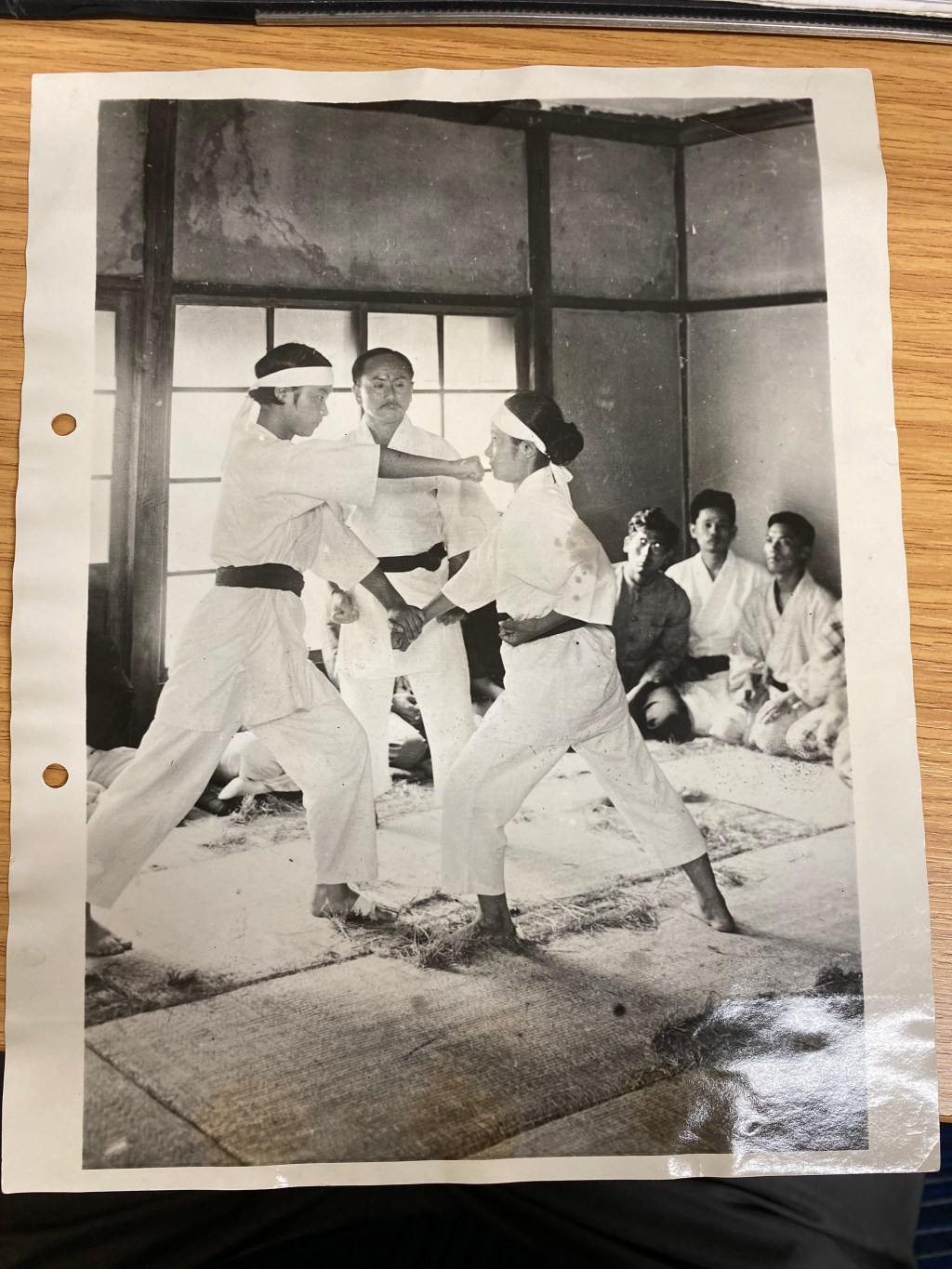
For Europe, there is the information that a Japanese student from the University of Tōkyō is said to have given karate instruction to fellow students in Berlin during an exchange stay in the 1930s. Another example of these early, isolated traces in Europe is a photograph showing master Funakoshi Gichin (1868–1957), leading karate authority on the Japanese mainland, who had settled in Tōkyō a few years earlier in order to teach karate in the capital region, instructing two women. The image reached Europe in the late-1920s through a press photo agency. Because knowledge of karate was quasi non-existent there at the time, the photograph was captioned as jiu-jitsu or jūdō. These two disciplines were already relatively well known in Europe and had attracted growing interest since the early twentieth century, making them the most familiar reference points for Western audiences encountering such images.
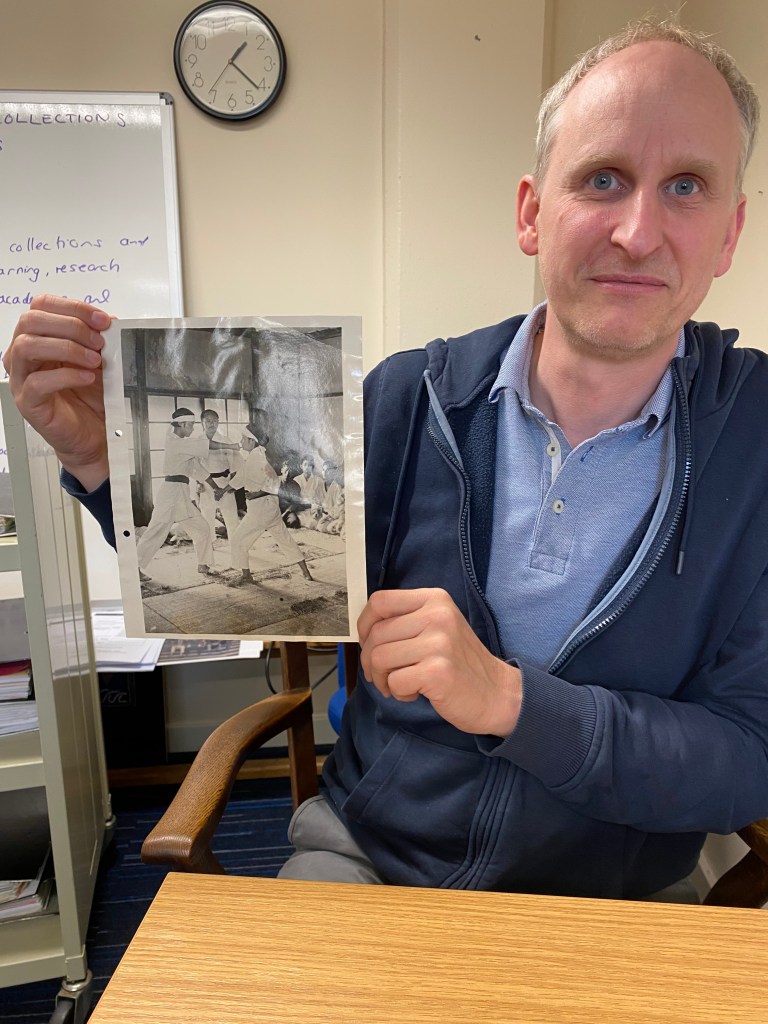
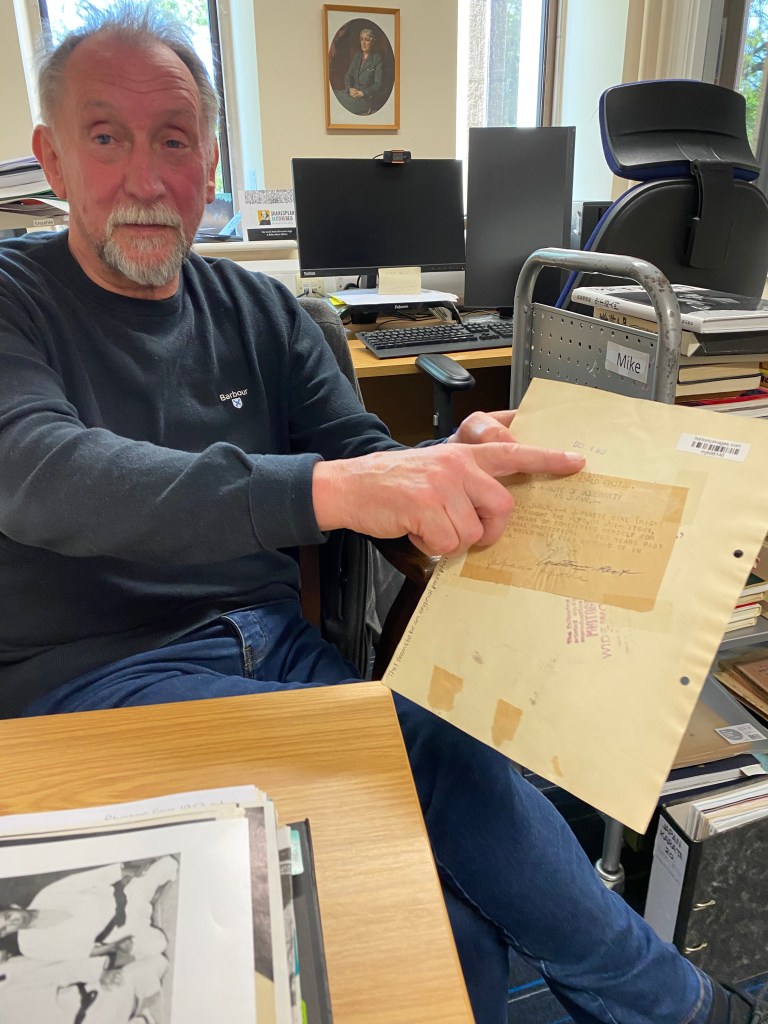
With Graham Noble at Durham University (April 2025)
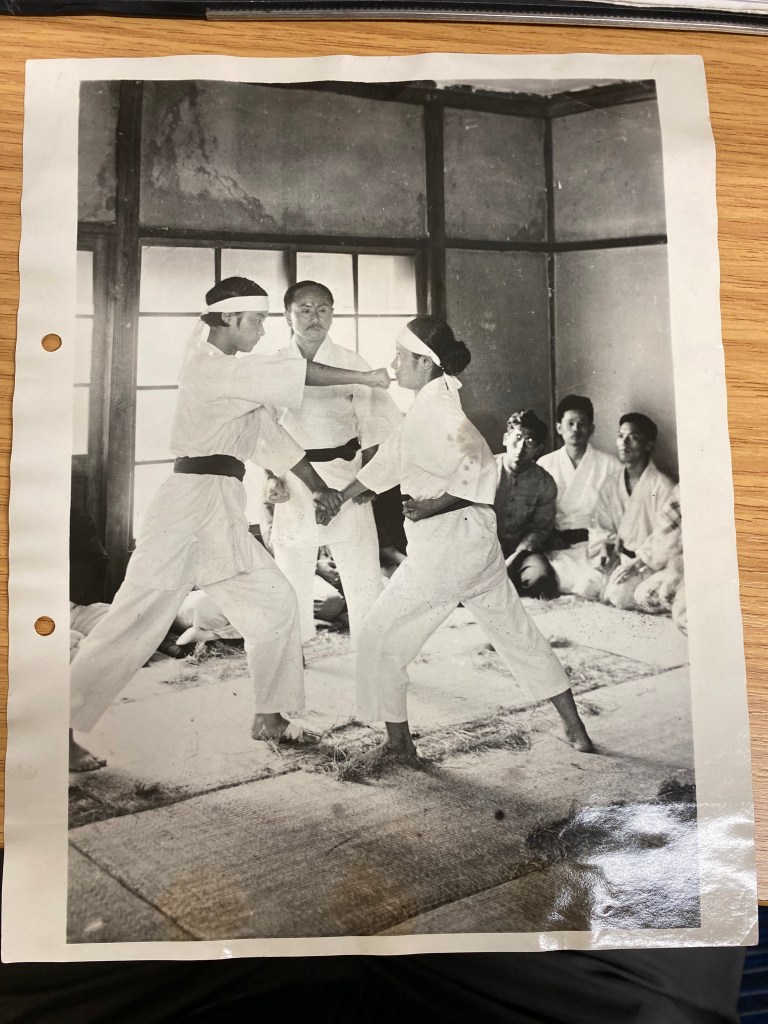
The photograph
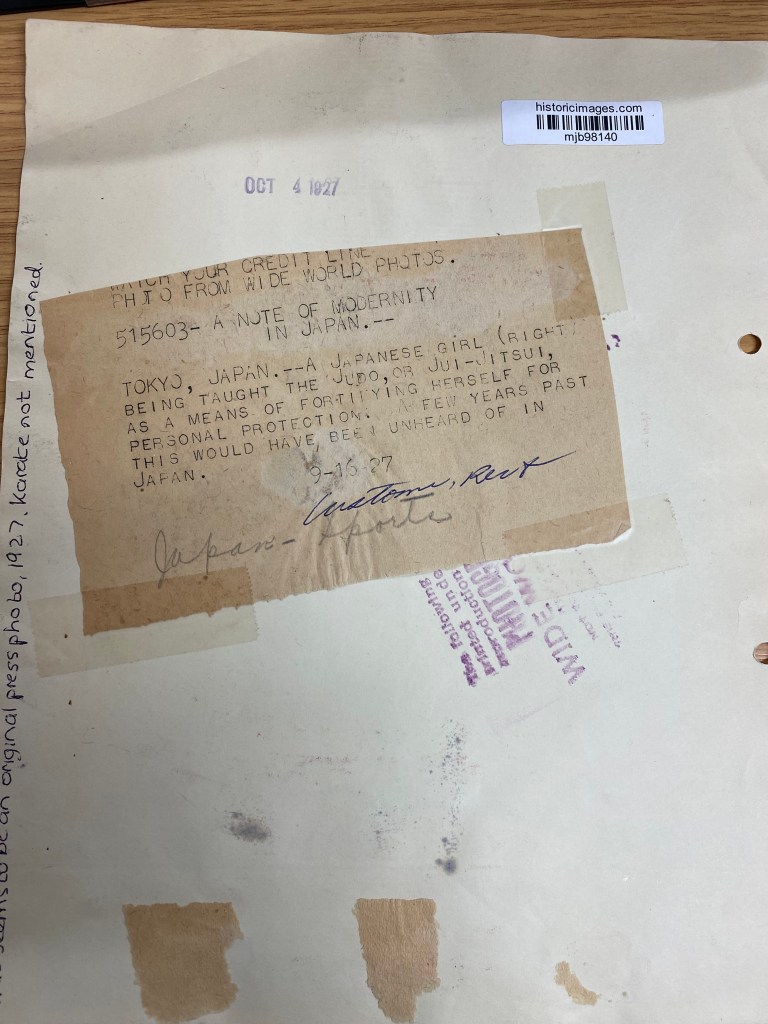
According to the available data, the photograph most likely dates from 1927. It has already appeared in several modern publications dealing with the history of karate. A print of the image is preserved in the Graham Noble Collection, held at Durham University. On the back side, the date “4 October 1927” is written, which presumably refers to the distribution or issue date of the photograph.
The print is credited to “Wide World Photos.” Wide World Photos was one of the early American photography agencies, distributed images to subscribing periodicals during the first half of the twentieth century. It was later owned by Associated Press (AP) in order to organize and expand the international distribution of news photographs. The print carries the reference number “515603“ and includes the typed caption in capital letters:
A NOTE OF MODERNITY IN JAPAN. TOKYO, JAPAN. — A JAPANESE GIRL (RIGHT) BEING TAUGHT THE JUDO, OR JUI-JITSU (sic), AS A MEANS OF FORTIFYING HERSELF FOR PERSONAL PROTECTION. A FEW YEARS PAST THIS WOULD HAVE BEEN UNHEARD OF IN JAPAN. 9–16–27
Under the watchful eyes of Funakoshi Gichin (1868–1957) two women demonstrate a partner exercise. They stand in the front stance (zenkutsu-dachi). The woman on the left defends against an attack by her partner by controlling the partner’s right hand with her left, while simultaneously delivering a counterattack with her right fist (gyaku-zuki) toward her partner’s face. Funakoshi and both women wear white karate uniforms modeled after the jūdō uniform. They wear belts indicating their rank within the grading system. On their heads they wear white headbands (鉢巻 hachimaki).
The woman on the right is considered the first female student among Funakoshi’s students; she is likely the 25-year-old Yoshiyama Masuko 吉山ます子, a teacher of koto, Japanese plucked half-tube zither instrument (OKKJ 2008: 594). Along the edge of the room several men are seated, observing the activity taking place in the center. The room itself appears visibly cramped and in poor condition: a damaged section of the ceiling, soot-stained walls, and worn tatami mats. According to the authors of the OKKJ, the photograph depicts a scene from the period when the Masagochō Dōjō 真砂町道場 operated between 1931 and 1938, a rented six-tatami-mat room provided by Yoshiyama, was used (idem.). As the photo can be dated to the year 1927, this chronological classification is disputable.
The photograph used in Western publications
Through the photo agency’s distribution channel, the photograph appears to have found its way into various publications in Europe.
France
For example, the photograph appeared in the French sports magazine L’As: tous les mois, tous les sports (The Ace: Every Month, Every Sport) in its November 1927 issue. The magazine reproduced a cropped version of the image under the headline “Les Japonaises se mettent au jiu-jitsu” (Japanese women take up jiu-jitsu). The accompanying text translated into English reads:
Japan is modernizing, and feminism is making increasing progress. After men’s sport, women’s sport is now entering the scene as well. The young girl is learning jujutsu. Only a few years ago, the Japanese would not have tolerated their women engaging in such activities. In small paper houses, whose panels recall the stage scenery of Madame Butterfly, they compete in skill under the guidance of masters of this art, while spectators, crouched in a circle, watch silently.
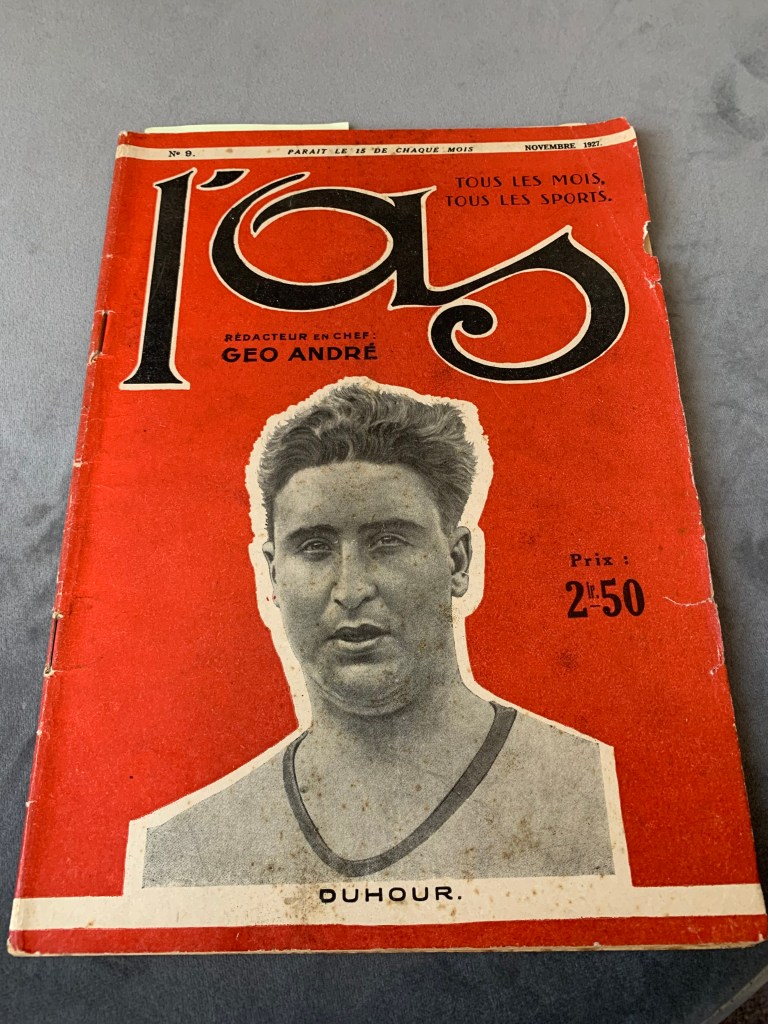
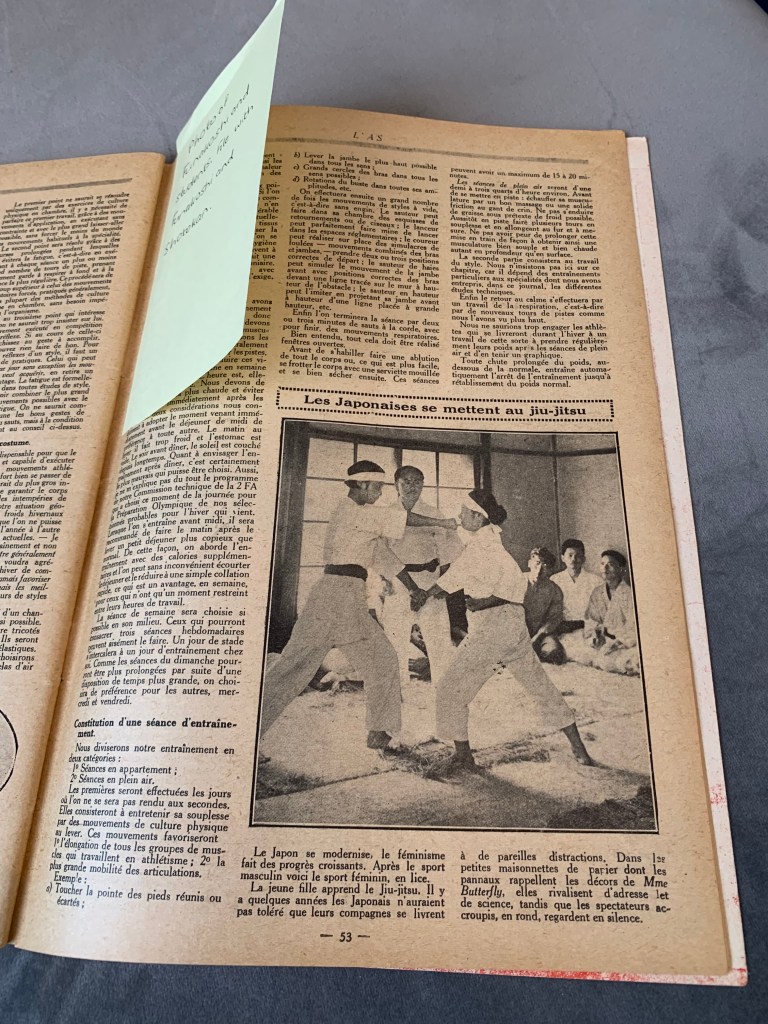
Issue of L’As: tous les mois, tous les sports (1927)
Germany
In the German-speaking world, a slightly modified illustration of the scene based on the photograph was used in volume 9 of the series Bibliothek der Unterhaltung und des Wissens (Library of Entertainment and Knowledge) (1928) under the heading “Frauensport in Japan” (Women’s Sport in Japan). The accompanying caption translated into English reads:
The Japanese art of self-defense, jiu-jitsu, is practiced in its homeland under the guidance of a teacher also by women.
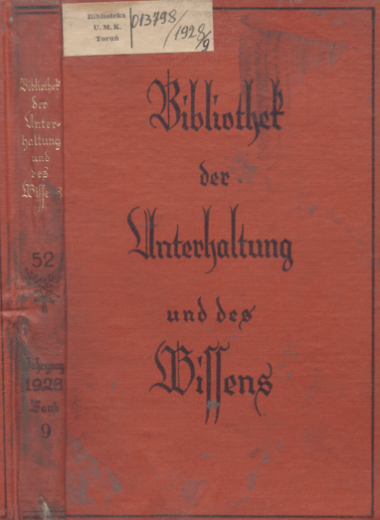
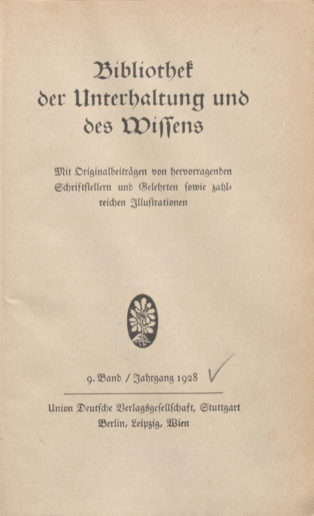
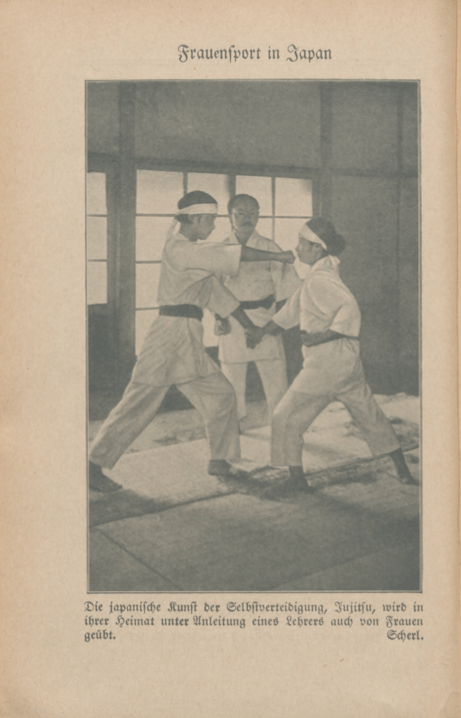
Volume of Bibliothek der Unterhaltung und des Wissens (1928)
Digitized by Kujawsko-Pomorska Biblioteka Cyfrowa
Finland
Several years ago, a Facebook user shared another interesting find. According to this, in January 1929, the photograph also appeared in the Finnish magazine Urheilija: Suomalaisten loistojulkaisu, which can be translated roughly as “Athlete: A splendid publication for Finns.” The caption beneath the image translated into English reads:
The third sex conquers the world. While masculinized women in America are training in boxing (left), young girls in Japan are now also being taught jiu-jitsu in special sports schools. Only a year ago this would still have been forbidden in the ‘Land of the Rising Sun.
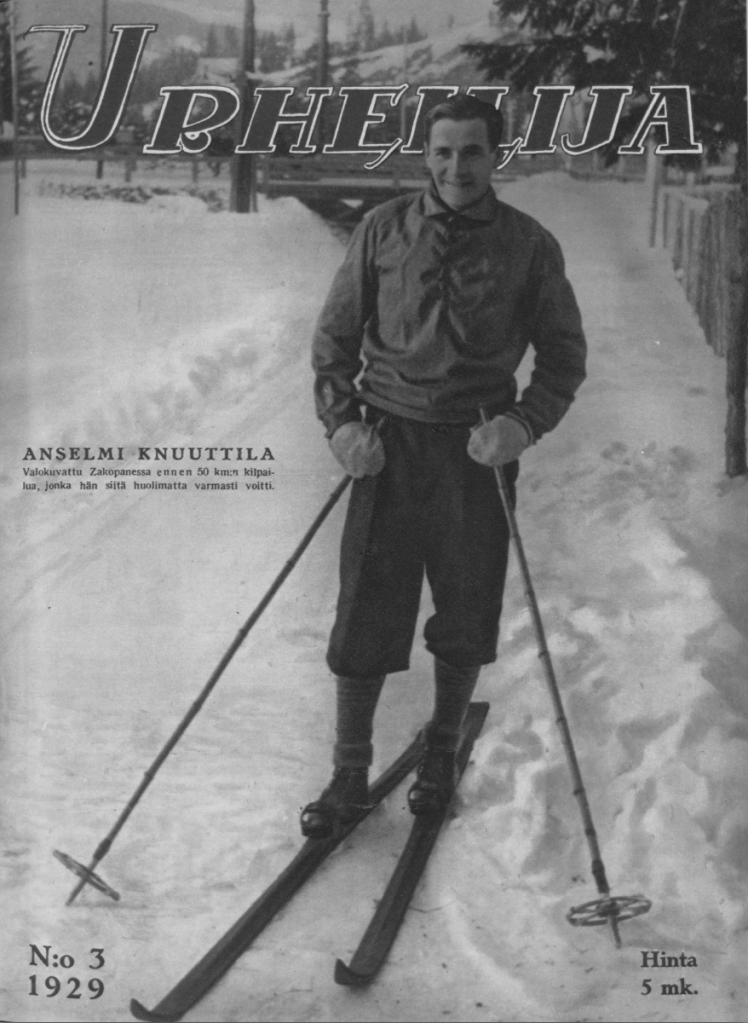
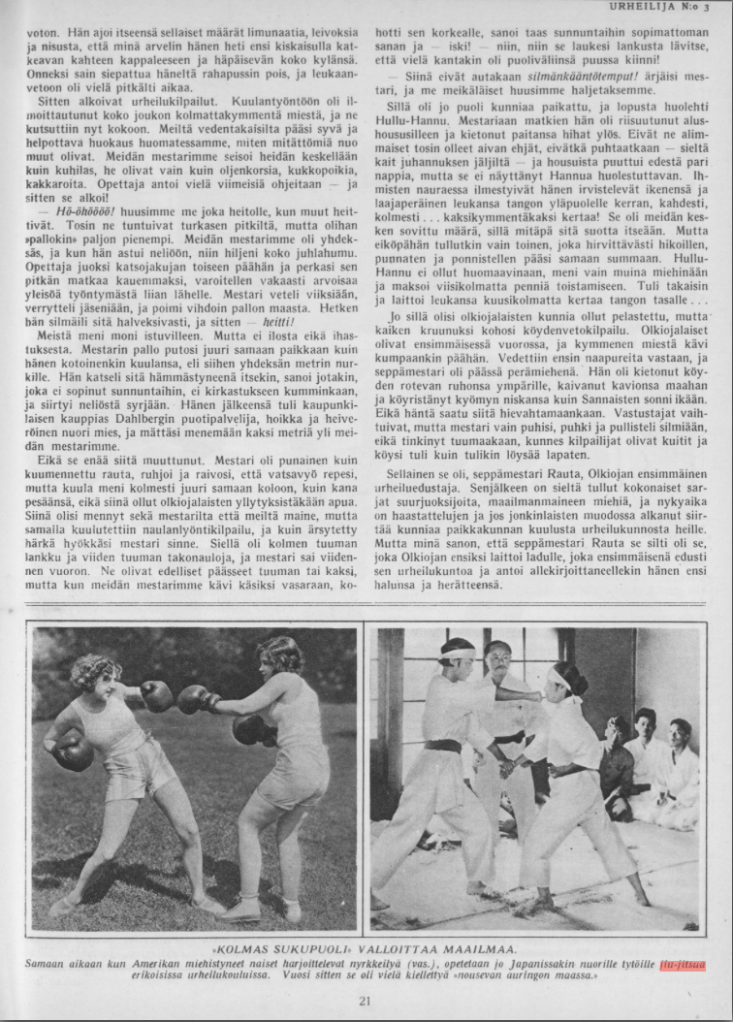
Issue of Urheilija (1929)
Digitized by Kansalliskirjasto Nationalbiblioteket
Today, the image is offered by the international photo agency Getty Images under the title “Judo Fighters at the Kodokan Institute in Tokyo on September 19, 1927,” where it can be licensed for further use.
Conclusion
In conclusion, the photograph tells not only of an early phase in the history of karate, but also of how images circulated through international press agencies and acquired new meanings in different contexts. The fact that it was consistently described in Europe as jūdō or jiu-jitsu demonstrates that karate was virtually unknown outside Japan at the time. The image therefore stands not only as a rare early visual record of karate, but also as evidence of the near complete absence of knowledge about this martial art in the international context of the period.
The author thanks Graham Noble for his continued support.
Sources:
Bibliothek der Unterhaltung und des Wissens (Library of Entertainment and Knowledge). Volume 9, 1928. Union Deutsche Verlagsgesellschaft: Stuttgart, Berlin, Leipzig, Wien, page 166 (in German)
L’ As: tous les mois, tous les sports (The Ace: Every Month, Every Sport, November 1927, page 53 (in French)
沖縄空手古武道辞典 Okinawa Karate Kobudō Jiten („OKKJ“) (Encyclopedia of Okinawan Karate and Kobudō). Tōkyō: Kashiwa Shobō, 2008 (in Japanese)

 Investigations into the history of karate