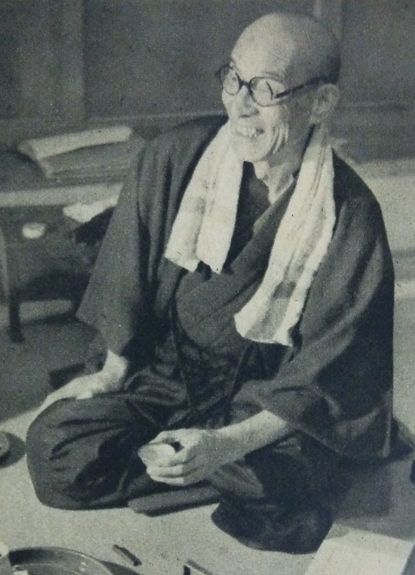
The artist Kosugi Hōan 小杉放庵 (born Kosugi Kunitarō, 1881–1964) was one of the first students of Funakoshi Gichin (1868–1957) on the mainland after the latter’s arrival in Tōkyō in 1922. We owe to him the cover design of Funakoshi’s first book, published in November 1922. Kosugi also left us an important account in the June 1930 issue of Bungei Shunjū 文藝春秋 (pp.31–33; republished in Nakasone Genwa’s Karate Kenkyū 空手研究, 1934), in which he shares anecdotes about karate.
Kosugi had earlier visited Okinawa from February 3 to February 27, 1916, to gather material for his art. He was closely associated with painters who had strong ties to Okinawa, and during that period he was transitioning from Western-style painting to a more traditional Japanese approach. In particular, he was inspired by Okinawa’s natural environment (Kobayashi 2008: 30). It was likely during this stay that Kosugi first came into contact with karate. In 1922, he approached Funakoshi to learn more about the art.
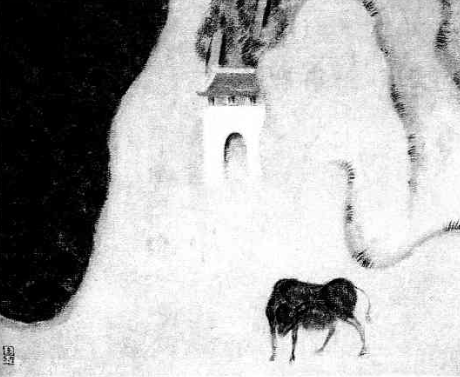
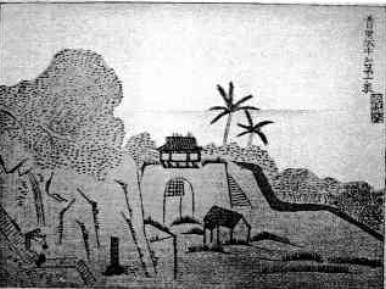
Selected Kosugi paintings from Okinawa (Kobayashi 2008)
Researchers at the Okinawa Karate Kaikan museum in Tomigusuku (Okinawa Prefecture) have been able to study Kosugi’s diary, now preserved in the Kosugi Hōan Museum of Art in Nikkō (Tochigi Prefecture). Alongside entries from his 1916 Okinawa visit, a poster in the Kaikan exhibition also shares two diary notes from 1922 (poster’s translation, slightly adapted):
June 1, 1922
“I heard that Mr. Funakoshi Gichin, a karate master, was visiting from Ryūkyū. I invited Mr. Yudate 弓館, a reporter for the Tōkyō Nichinichi Shimbun, and Mr. Harishige 針重 of the Bukyōsha to introduce him. We talked about various aspects of karate from past seven o’clock in the evening.”
June 3, 1922
“In the evening, I invited Mr. Funakoshi to learn karate’s Kūsankū. Interesting.“
Funakoshi Gichin had been invited to present Ryūkyū karate at the First Sports and Physical Education Exhibition (第一回運動体育展覧会 dai ikkai taiiku tenrankai), sponsored by the Ministry of Education in Tōkyō in May 1922. After a few more demonstrations, he decided to remain in the capital in order to introduce karate to a wider audience. These two diary entries thus provide a very personal glimpse into Kosugi’s encounter with Funakoshi.
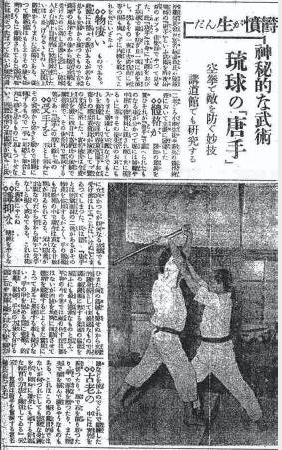
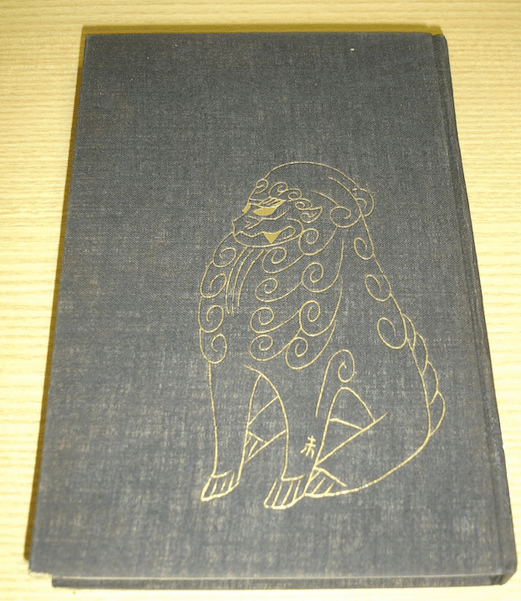
Clipping of the 1922 newspaper article and cover of Funakoshi’s book (1922)
The two contacts Kosugi introduced Funakoshi to were crucial in his early days in Tōkyō. On June 3, 1922, the Tōkyō Nichinichi Shimbun published an article about Funakoshi’s karate demonstrations at Kosugi’s Tabata Poplar Club, quoting Funakoshi at length as he explained the background and benefits of karate training. Meanwhile, the Bukyōsha publishing house brought out Funakoshi’s Ryūkyū kenpō karate 琉球拳法唐手—the very first karate book—in November 1922. Thanks to Kosugi’s support and connections, Funakoshi was able to make karate better known on the Japanese mainland.
Sources:
Anonymous (1922): 鬱憤が生んだ神秘的な武術。「唐手』 空拳で敵を防ぐ妙技 Uppun ga unda shinpi-tekina bujutsu. “Karate” kūken de teki o fusegu myōgi (A mystical martial art born of resentment. “Karate” – A masterful technique to defend against enemies using empty fists), in: 東京日日新聞 Tōkyō Nichinichi Shimbun, 3 June 1922 (in Japanese)
朝日新聞社 『アサヒグラフ』1955 (photograph of Kosugi Hōan, public domain)
Da Luz, Miguel (2014):『琉球拳法唐手』の挿画作者 山 城正綱の消息 “Ryūkyū kenpō karate” no sōga sakusha Yamashiro Masatsuna no shōsoku (News about Masatsuna Yamashiro, the illustrator of “Ryūkyū kenpō karate“), in: 沖縄空手通信 Okinawa karate tsūshin, No. 92 (February), pp. 1–2
Feldmann, Thomas (2025): An Annotated Bibliography of Funakoshi Gichin. Lulu Publishing
Funakoshi, Gichin (1922): 琉球拳法 唐手 Ryūkyū kenpō karate (Chinese hand method of the fist from Ryūkyū). Tōkyō: Bukyōsha 武俠社
Kobayashi, Junko (2008): 小杉放奄と沖縄 – 沖縄旅行時の日記と作品を通して Kosugi Hōan to Okinawa – Okinawa ryokōji no nikki to sakuhin o tōshite (Kosugi Hōan and Okinawa – Through his Okinawa travel diary and artwork), in: 沖縄県立芸術大学紀要第十六号 Bulletin of the Okinawa Prefectural University of Arts, Nr. 16, pp. 11–30
Poster at the Okinawa Karate Kaikan, Tomigusku (Okinawa Prefecture), titled 小杉自記 Kosugi jiki (Kosugi diary), no author is mentioned; accessed on July 31, 2025

 Investigations into the history of karate
