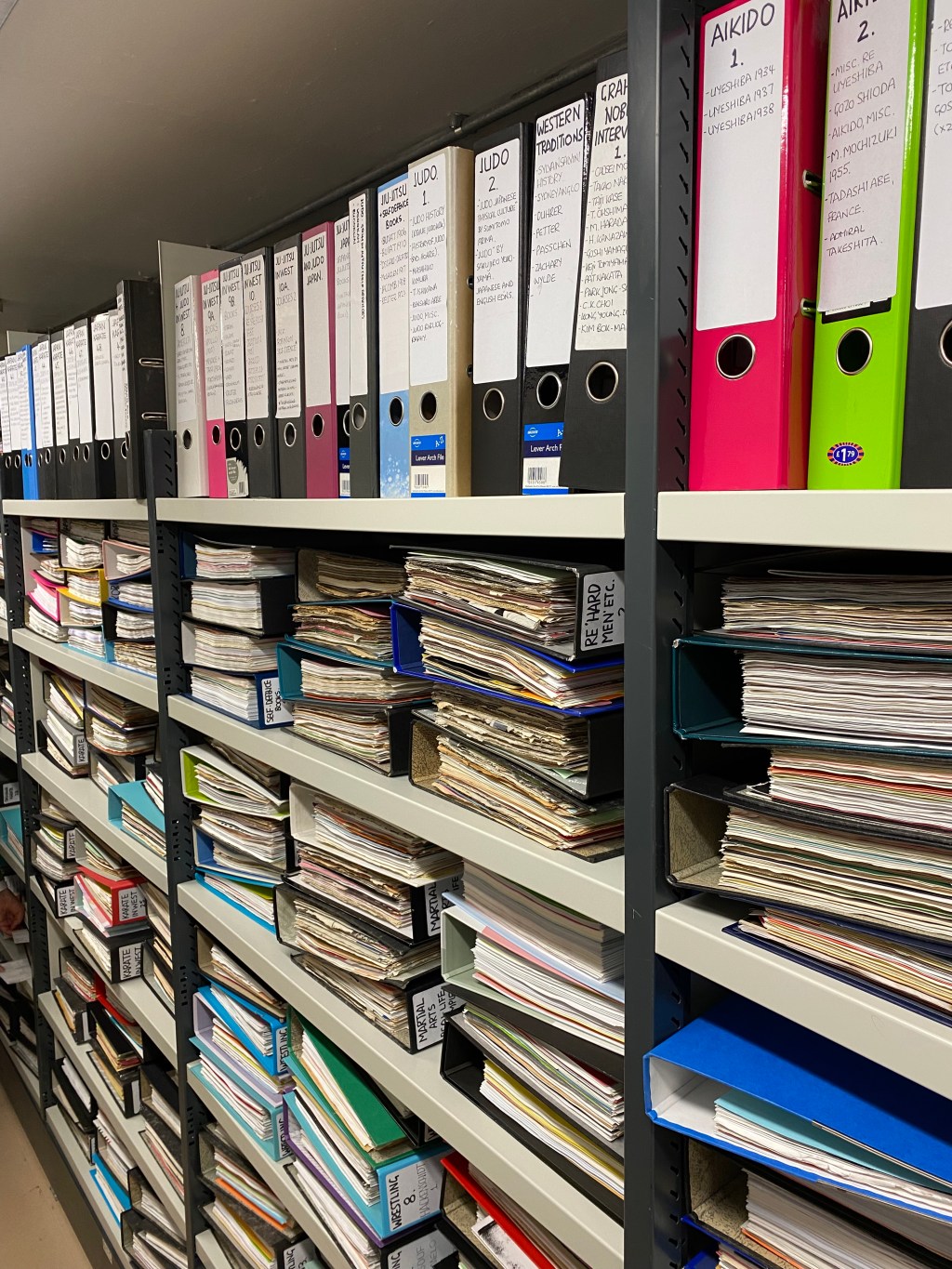
For martial arts research, private collections are of inestimable value alongside libraries and archives. One such collection is that of Graham Noble.
Graham Noble was born in 1949 and became interested in karate and its history in the mid-1960s. Seeing that reliable information on the martial arts, especially karate, was scarce, Graham set about gathering books—many of them originals—and magazine articles. As karate’s popularity increased, his collection expanded to include clippings, correspondence, notes from conversations, photographs translations from Japanese, and interviews with leading figures of the art. Over the years, he also assembled material on related fields such as jūjutsu, self-defence, wrestling, and the traditions of weightlifting and old-time strongmen. The result is an extensive archive comprising hundreds of books and more than two hundred lever-arch files, carefully organized
I first came into contact with Graham during my research for my book about Itosu Ankō (1831–1915)—published in 2021—thanks to an introduction by Mark Tankosich (Hiroshima). Of course, I had already long been familiar with Graham’s name—and with his work. For decades, he has dedicated himself to the history of martial arts, with a particular focus on karate, though his scope also extends into other disciplines. His portraits, historical overviews, and interviews with leading experts were groundbreaking in their time. Even today, excerpts of his writings continue to appear—for instance, in Shotokan Karate Magazine—and he is frequently cited by scholars and practitioners alike. For me personally, Graham’s invaluable research on Itosu Ankō and Yabu Kentsū (which I researched after I had finished my previous book on Itosu) was decisive. Above all, it was the difficult-to-access sources—materials from Japanese sources and from libraries across the world—that Graham painstakingly gathered which proved especially valuable. Over many decades, he corresponded with like-minded researchers, martial artists, and masters—including Ôshima Tsutomu (born 1930), Ohgami Shingo (1941–2019) and even Gima Makoto (1896–1989)—on a wide variety of topics, building a body of material that is truly one of a kind. When I visited Graham in northern England in April 2022, I did not at first grasp the full extent of his collection. His house was filled with boxes of books, folders, and assorted documents, with shelves packed to the brim. The collector in me would gladly have taken on such a treasure trove—at a fair price, of course.

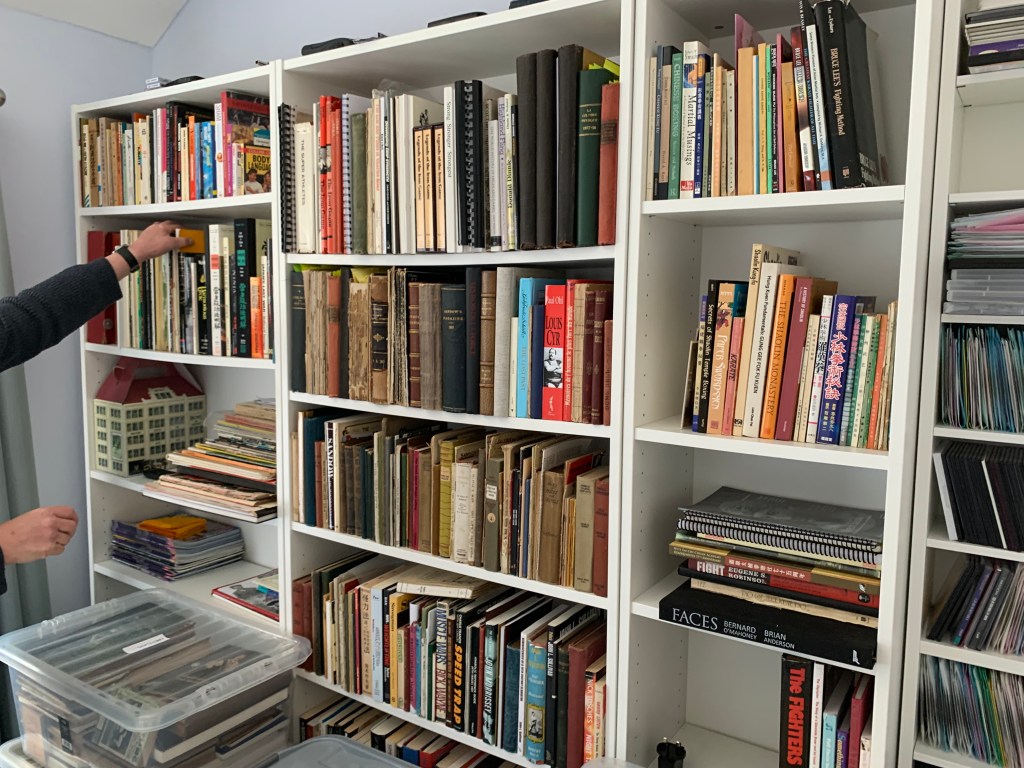
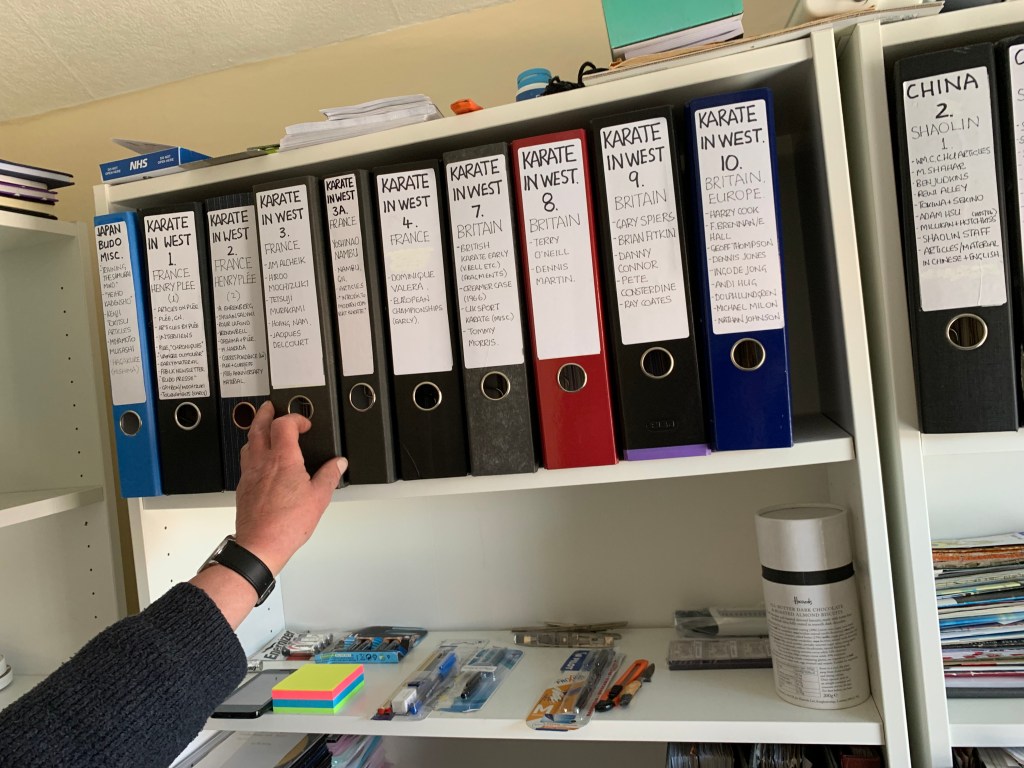
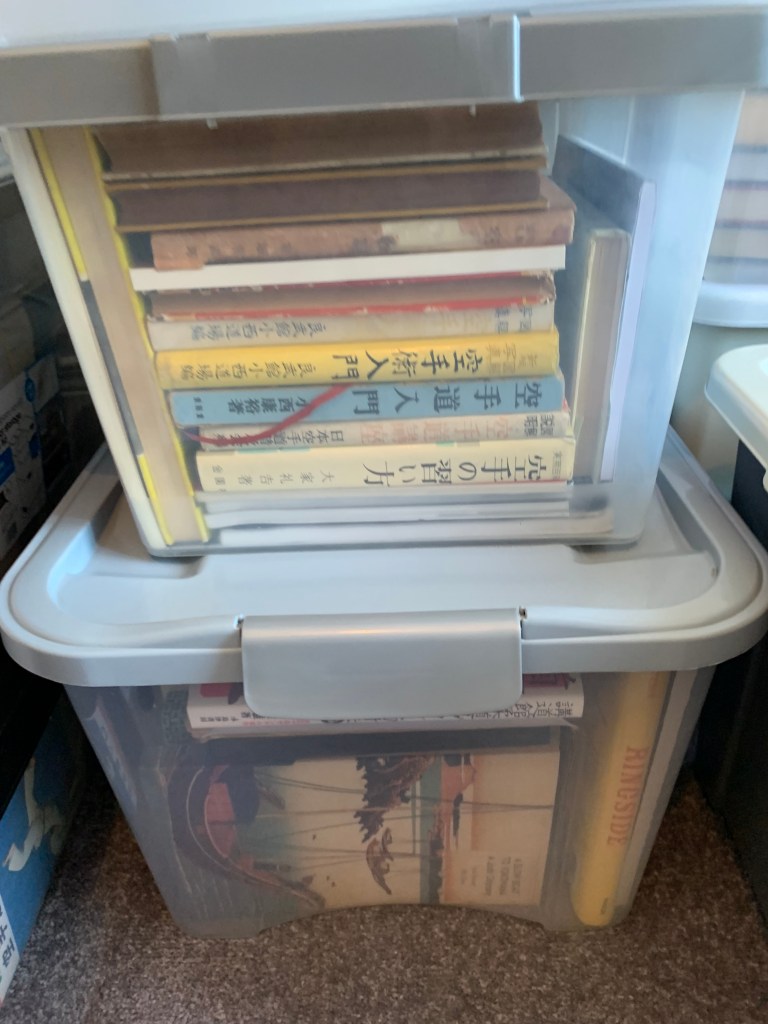
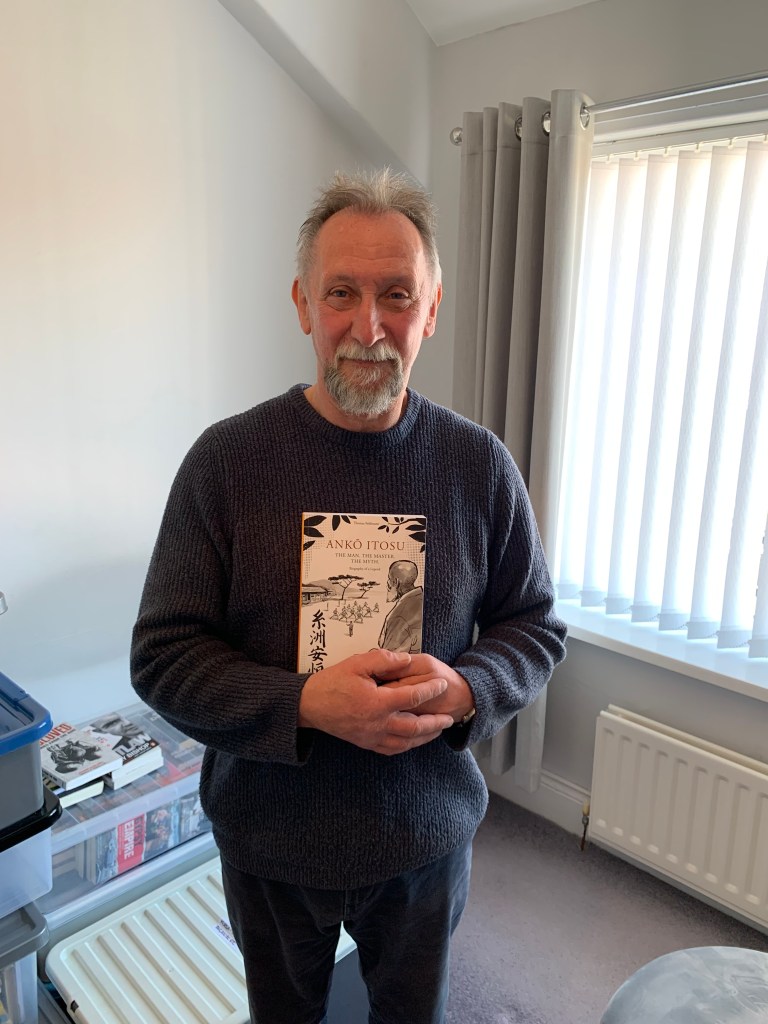
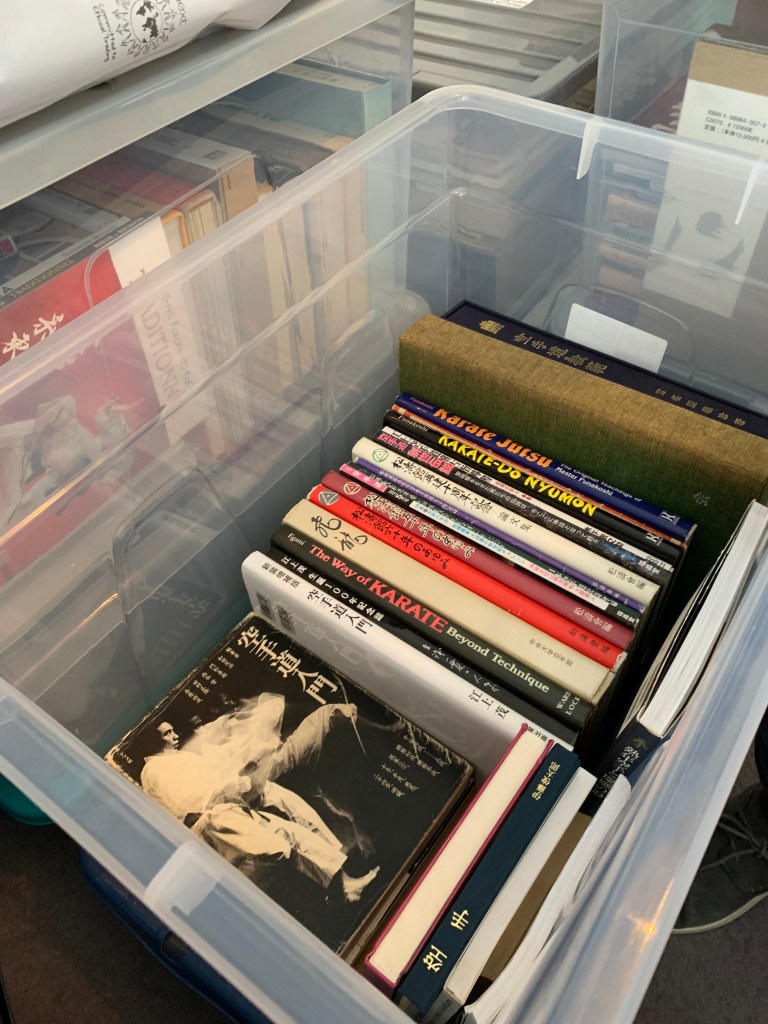
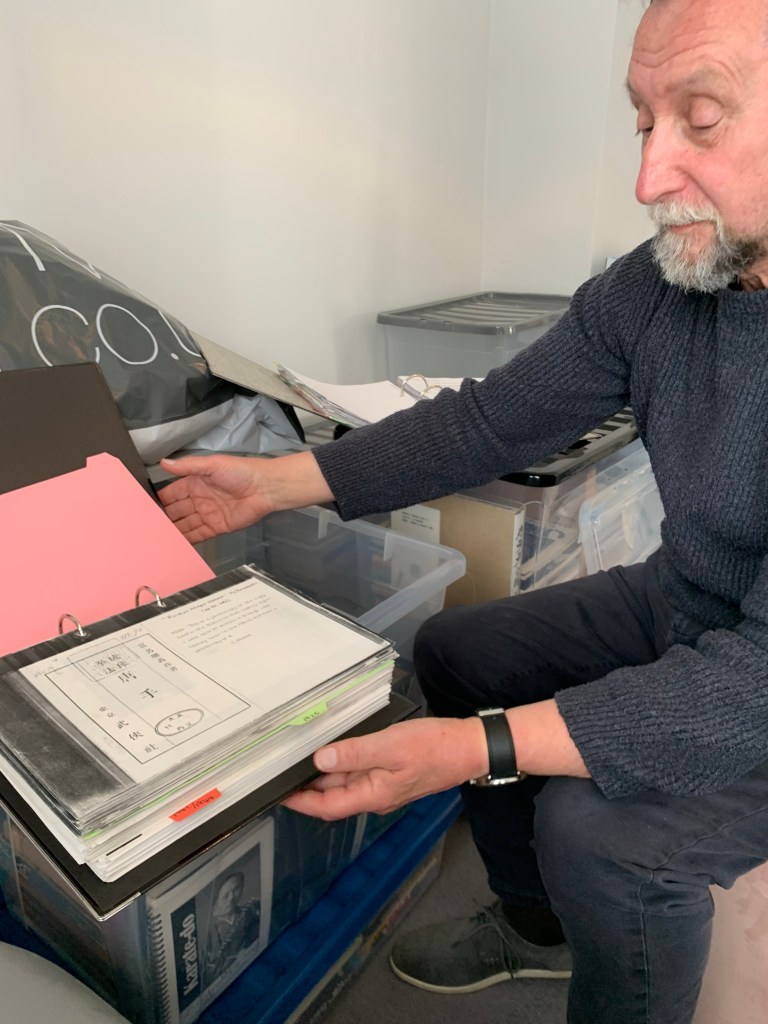
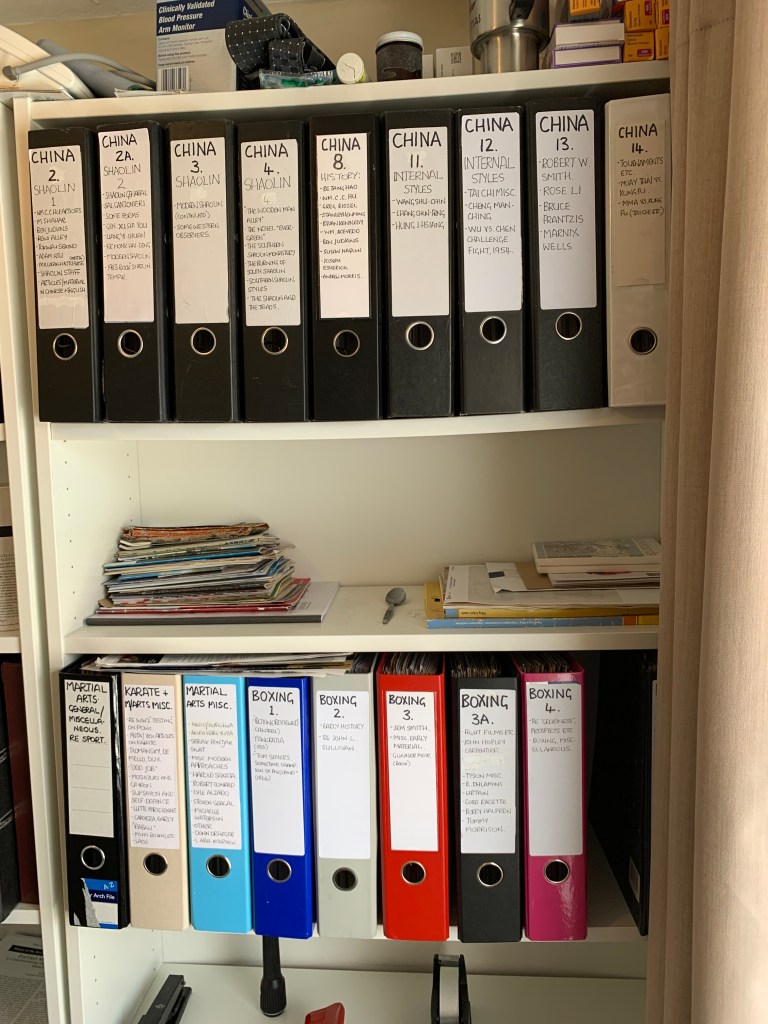
At Graham Noble’s house (April 2022)
But Graham had something else in mind. He wanted to keep the collection intact and decided to donate it to Durham University, one of the oldest and most prestigious universities in the United Kingdom. Founded in 1832, Durham is a world-class research institution, known for its historic collegiate system, its rich academic resources, and its outstanding library collections. The university has a strong tradition in the humanities and social sciences, and its archives attract scholars from across the globe. By placing the collection here, Graham ensured that it would not only be preserved, but also remain accessible to future generations of researchers, practitioners, and enthusiasts.
Similarly researchers can access the Richard Bowen Collection, an archival collection of materials and publications on the history of jūdō, assembled by Richard Bowen (1926–2005), noted jūdōka and sports historian, which, after his death, was made available at the University of Bath in England. For research in this field, Graham’s collection is now essential. I cannot thank him enough for making his life’s work publicly available, and I can only strongly recommend it: the collection is simply outstanding. The university has begun the formidable task of cataloguing the material—no small undertaking given its sheer size and diversity. I had the opportunity to visit the library myself and to examine key sources for my own research in April 2025. I spent two full days there—far too short, I must admit. Graham was present for one day as well, and personally guided me through some of the most significant items in the collection.
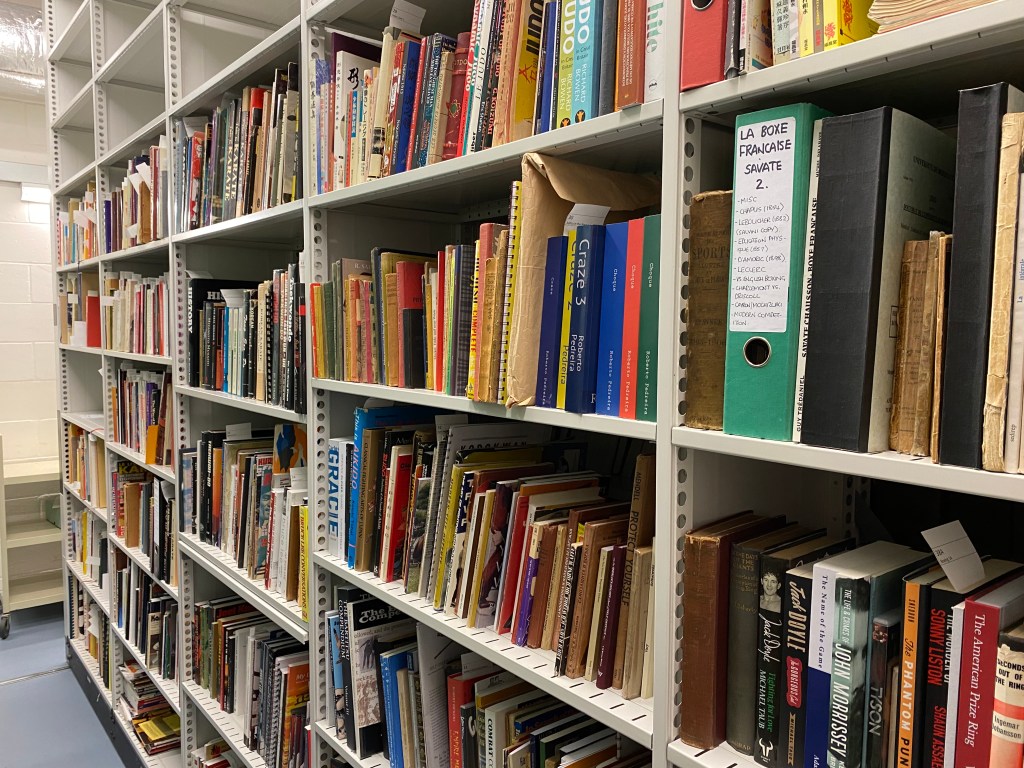
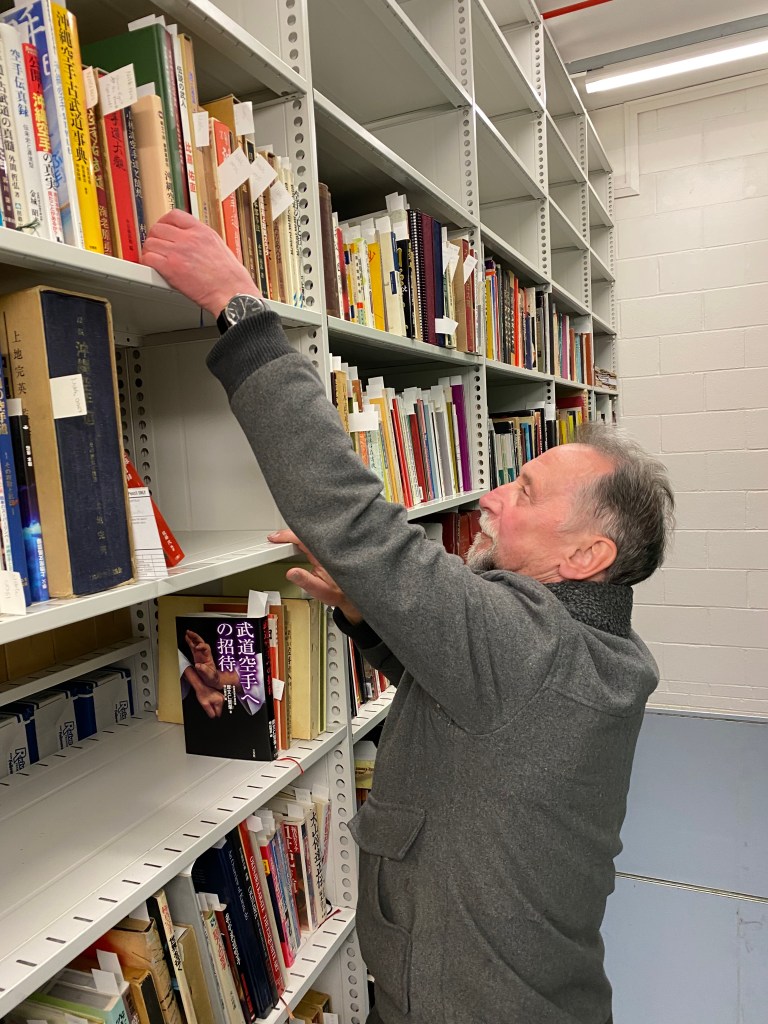
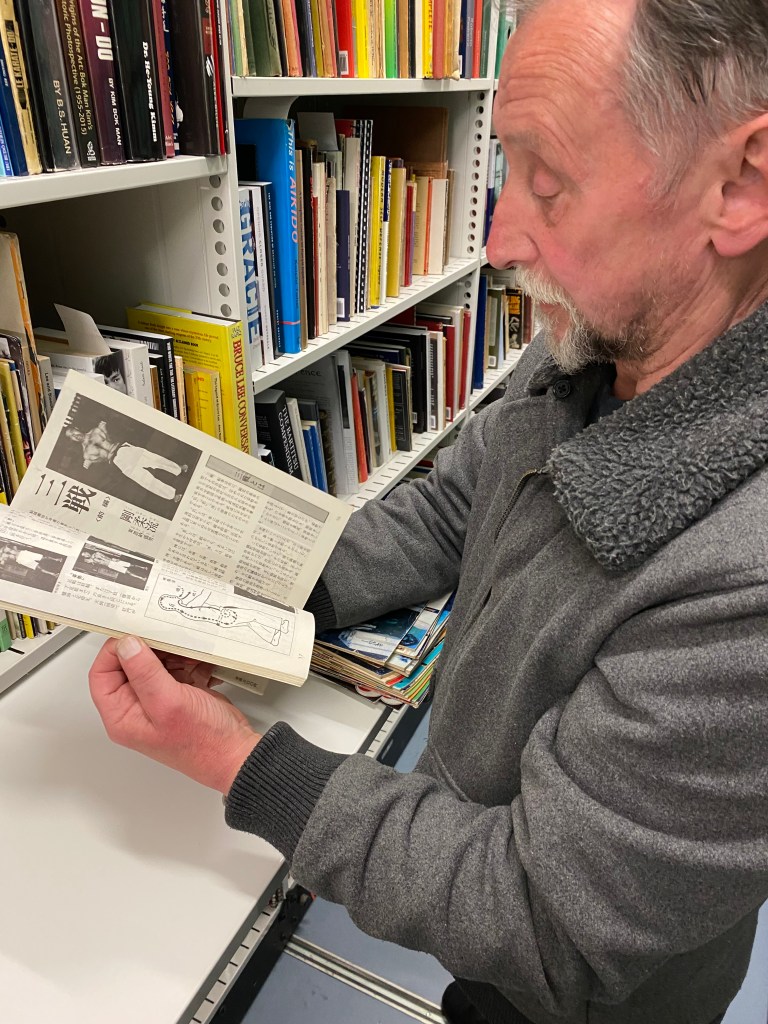
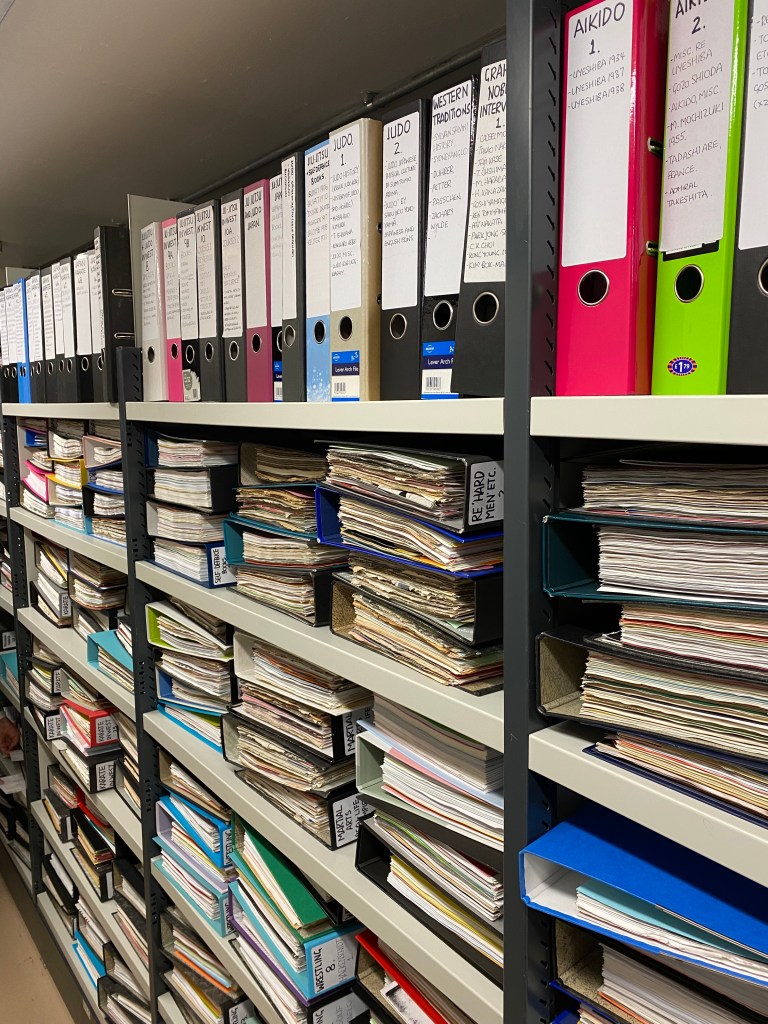
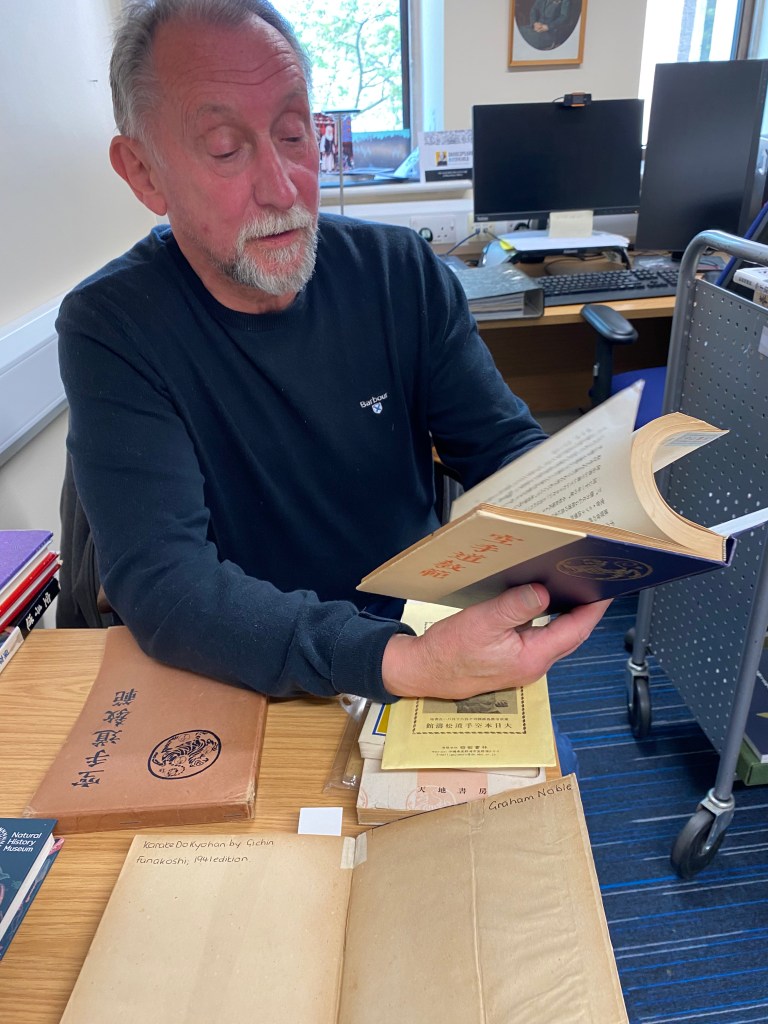
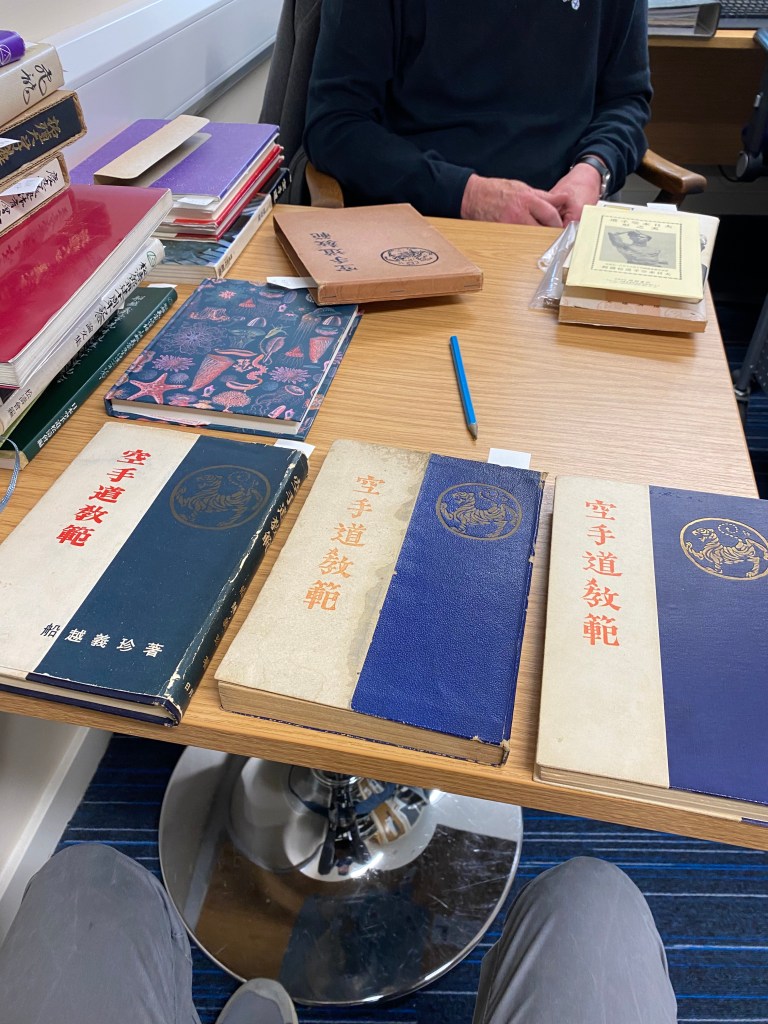
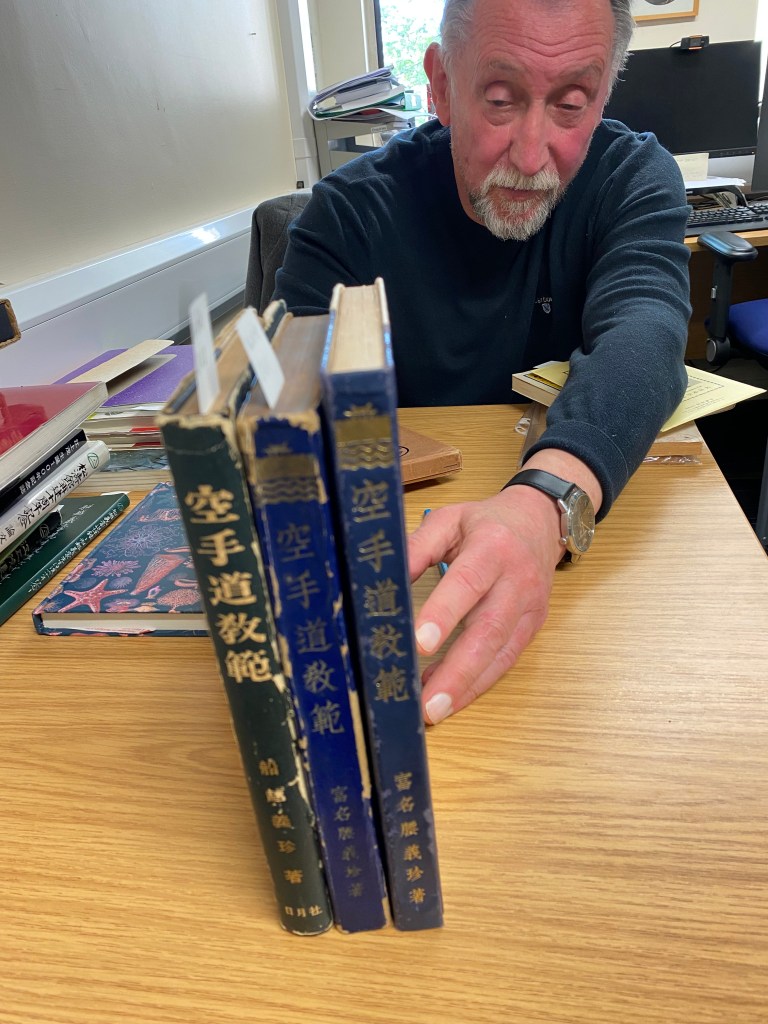
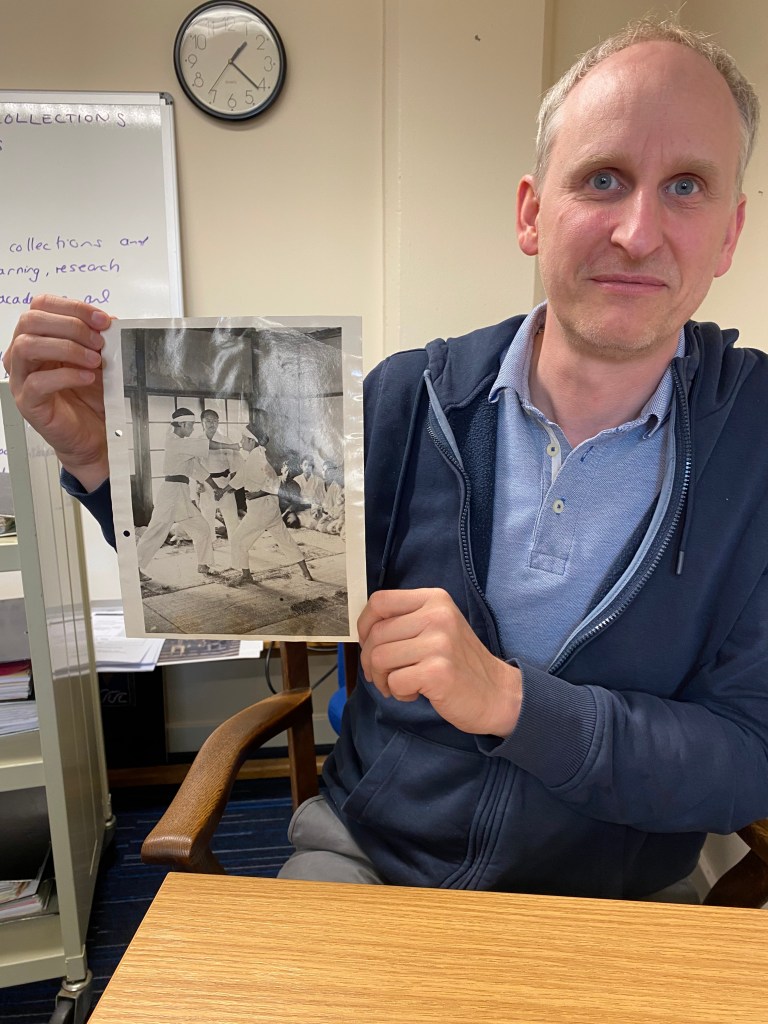
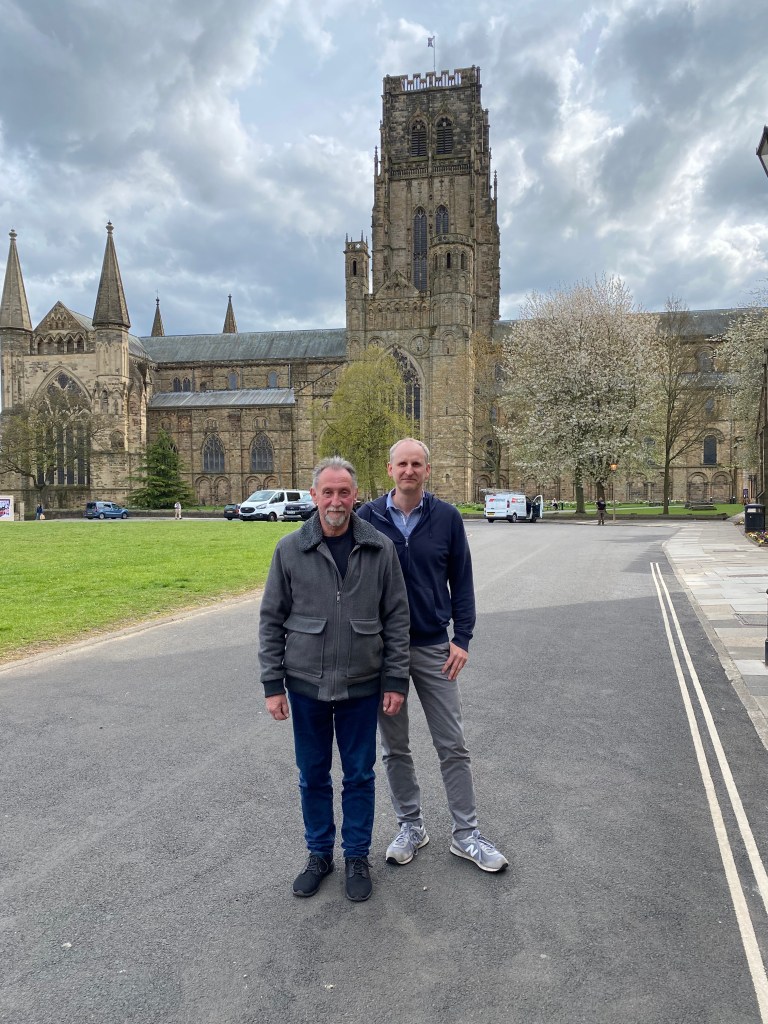
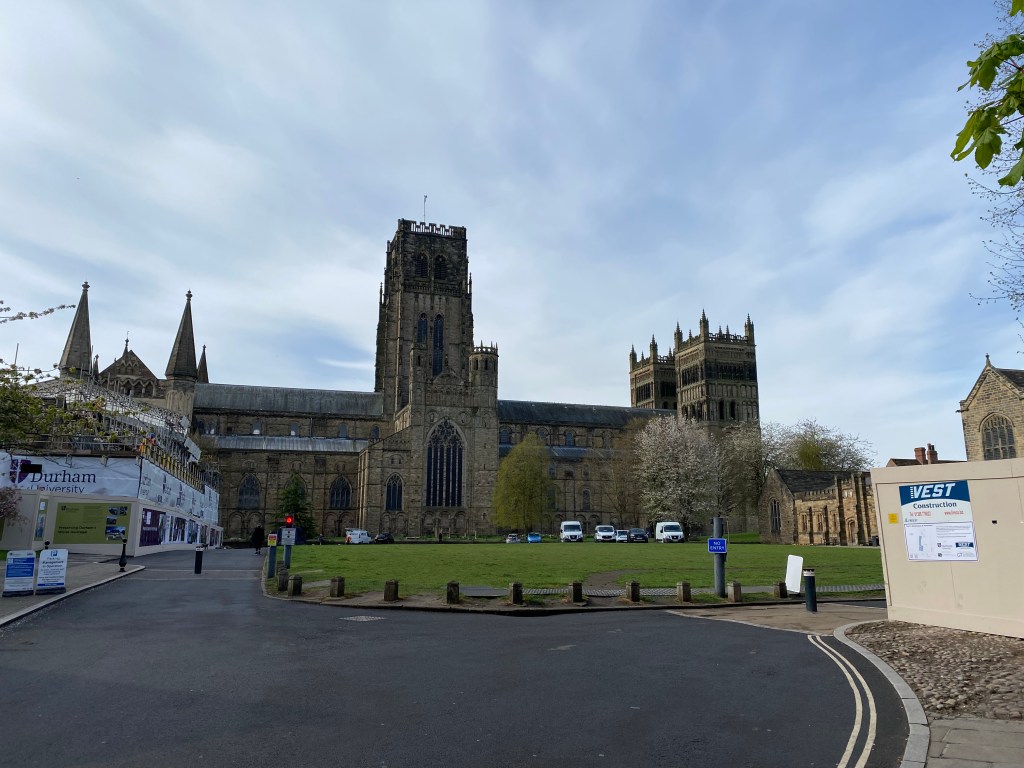
Accessing the Graham Noble Collection in Durham (April 2025)
With heartfelt gratitude to Graham—for the constant support, for contributing the foreword to my Yabu book (2024), and for the generous back-cover testimonial for my Funakoshi bibliography (2025). You are, and continue to be, both a role model and a guiding light. I truly hope we will have the chance to meet again soon.

 Investigations into the history of karate