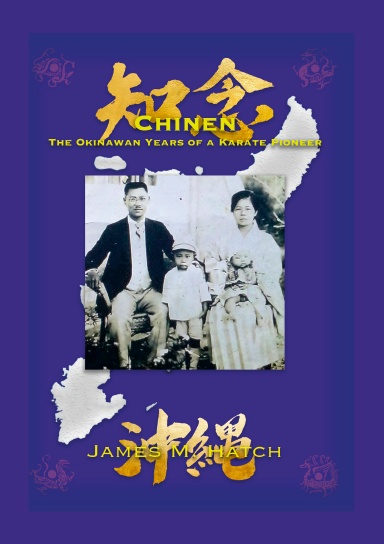
I am delighted to share an interview with James M. Hatch. After many years of research, James published a book in early 2025 on Chitose Tsuyoshi (千歳 剛直, 1898–1984), an influential figure in Okinawan karate who later taught and promoted the art on the Japanese mainland: Chinen: The Okinawan Years of a Karate Pioneer (Lulu, 2025). I had the privilege of contributing to the final stages of the manuscript as a co-proofreader.
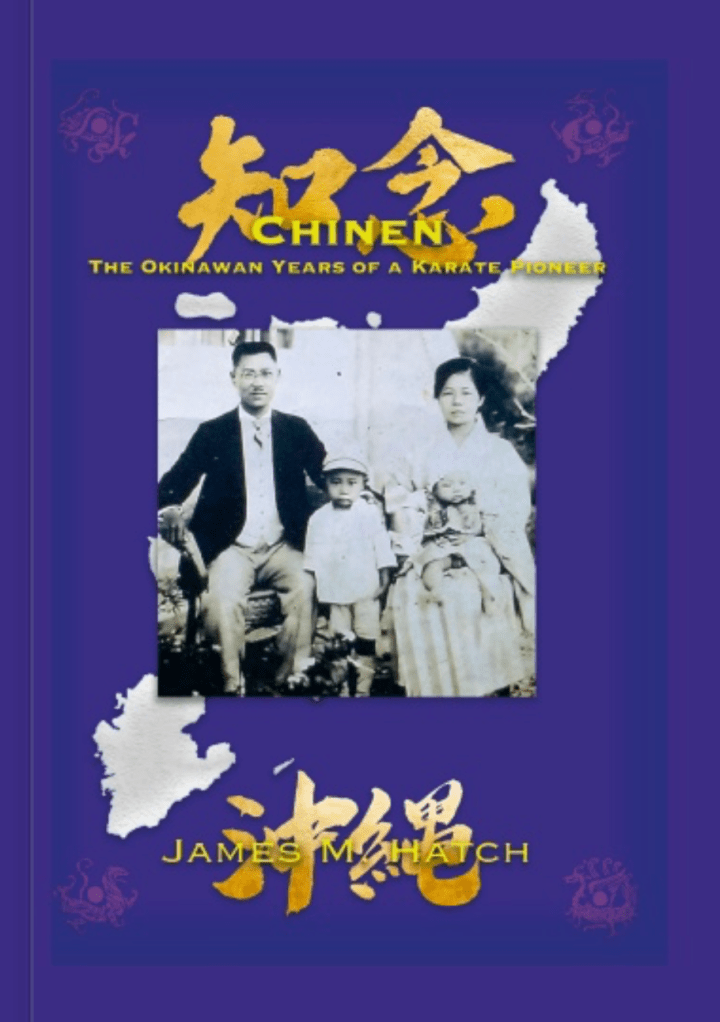
Before answering the interview questions, James asked me to clarify that his work should not be understood primarily as a book about karate. He told me that while Chitose and karate provide the narrative thread, the book is first and foremost a work of historical biography and social history that reconstructs the world of one Okinawan man, his family, and the society into which they were born. More broadly, it explores the historical, cultural, political, and social landscape of Okinawa during a period of profound transformation and seeks to restore Okinawan voices to a history that has too often been romanticised, simplified, or retold through narratives constructed elsewhere.
James, could you please tell us briefly who Chitose was?
Chitose was an Okinawan born during one of the most transformative periods in the islands’ modern history. His life spanned an era of extraordinary political, social, and cultural change as Okinawa negotiated the complex transition from the former Ryūkyū Kingdom into the modern Japanese nation-state. Although he is best remembered internationally as the founder of Chitō-ryū Karate, his significance extends well beyond the martial arts. His life offers a valuable window through which to examine the experiences of an Okinawan family living through war, poverty, modernisation, educational reform, and profound cultural change.
What inspired you to write a book about him?
In many respects, the book began with the wrong question. Initially, my intention was to better understand Chitose himself. However, as the research progressed, it became increasingly apparent that neither Chitose nor karate could be understood in isolation. The further I investigated, the more evident it became that the real subject was not the individual, but the historical world that produced him. This is therefore not a study of karate in the conventional sense. Rather, Chitose and karate serve as historical vehicles through which to explore one aspect of Okinawan culture that has too often been romanticised, appropriated, or misunderstood at the expense of authentic Okinawan voices. The project gradually evolved from the biography of a martial artist into a broader exploration of Okinawan society during the late nineteenth and early twentieth centuries. My objective became to reconstruct, as faithfully as the historical evidence would allow, the lived experiences of one Okinawan family and, through them, to illuminate the wider historical landscape within which they lived.
How did you conduct research for this book? Did you have access to personal archives, students, or family members?
The research was conducted over many years and drew upon a wide range of primary and secondary materials. Living in Japan provided far more than geographical proximity; it afforded the linguistic, cultural, and historical understanding necessary to interpret evidence within its proper context. The project began with an extensive review of the existing literature before expanding into archival research, official records, newspapers, personal documents, and interviews with individuals connected to Chitose’s life and legacy. Throughout the project I sought to triangulate these diverse forms of evidence in order to distinguish historically verifiable conclusions from stories that had simply been repeated over time. Historical biography presents particular challenges, requiring the historian continually to navigate between evidence, memory, tradition, and omission. Wherever possible, I have allowed the surviving evidence—not inherited narratives—to shape my conclusions.
How long did the entire writing process take from start to finish?
From its earliest conception to publication, the project spanned more than two decades, beginning in 2003 and finally reaching publication in 2024. Like many long-term historical studies, progress was neither linear nor uninterrupted. Professional commitments, further research, and the discovery of new sources repeatedly required earlier assumptions to be reconsidered and sections of the manuscript to be rewritten. Looking back, the book owes an enormous debt to the generosity of numerous colleagues, friends, archivists, practitioners, and scholars who shared their knowledge, challenged my assumptions, and encouraged the project to continue over many years. Without their support, it is unlikely that the manuscript would ever have reached completion.
What aspects of his life do you think will surprise readers the most?
Perhaps the greatest surprise will be discovering just how ordinary Chitose’s life was in many respects. Rather than presenting the familiar image of an almost mythical karate master, the historical record reveals an Okinawan whose life was shaped by bereavement, hardship, poverty, social expectations, and the uncertainties that confronted countless families during this period of rapid change. His achievements become all the more remarkable when viewed against these realities. More broadly, I hope readers will appreciate that individuals are invariably products of their historical circumstances. Chitose’s life cannot be understood apart from the Okinawa that shaped him, just as Okinawan history cannot be reduced to the history of karate.
What do you hope readers take away from this book?
Above all, I hope readers come away with a deeper appreciation of Okinawa and its people. Although Chitose provides the narrative focus, this is fundamentally a study of Okinawan society viewed through the experiences of one individual and his family. My hope is that readers will gain a richer understanding of the complexities of Okinawan history, the resilience of its people, and the social and cultural forces that shaped everyday life during a period of profound transformation. If the book succeeds in encouraging readers to see karate not as an isolated tradition but as one cultural expression emerging from a much broader historical landscape, then I will feel it has achieved its purpose. More importantly, I hope it contributes, in however small a way, to returning Okinawan voices to a history that has too often been interpreted through the assumptions and priorities of others.
If you could ask your book’s protagonist one question, what would it be?
I think I would ask him a very simple question: “As an Okinawan who lived through this period, what did I miss?” No matter how exhaustive the research, historical scholarship remains an exercise in reconstruction. The archive is inevitably incomplete, memories are selective, and many aspects of everyday life leave little trace within the historical record. More than anything, I would want to know what I had failed to see—not because the evidence was absent, but because my own perspective as a twenty-first-century historian had prevented me from recognising it. I suspect his answer would teach me more about Okinawa than about himself, and that, perhaps, is precisely the point.
With James M. Hatch (left), Tōkyō, 12 August 2024

 Investigations into the history of karate