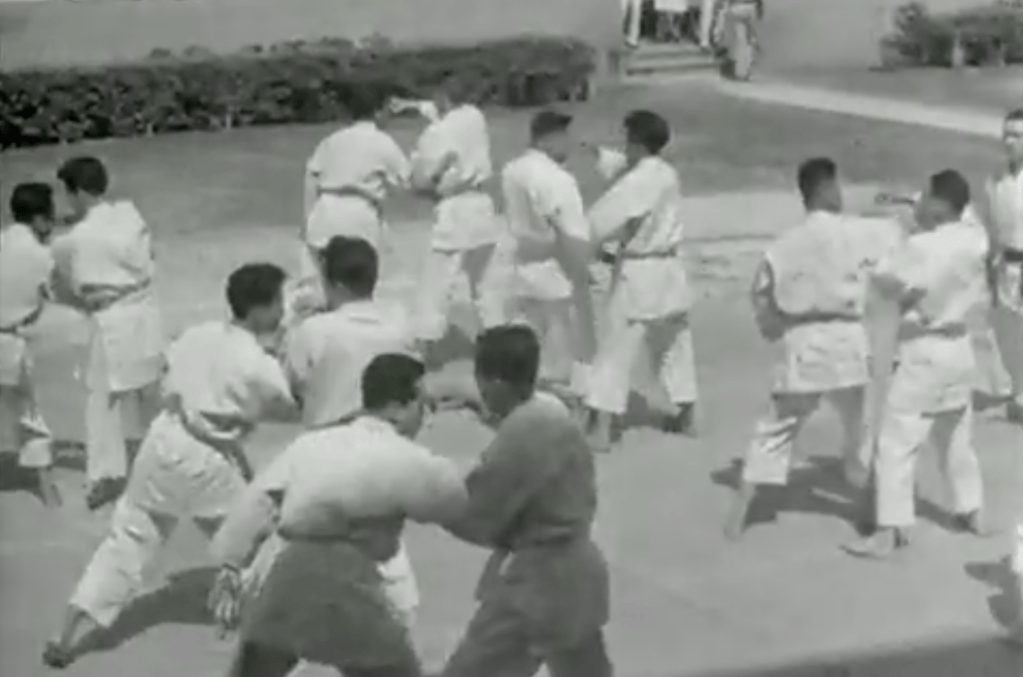
I had previously written about a possible connection between karate and jūdō. The point was that Kanō Jigorō (1860–1938) probably adapted techniques from karate into his system. Recently, I came across a clip from a Japanese newsreel (日本ニュース No. 149, 13 April 1943) that features such a technique in a very brief scene (at 04:46). According to critics, these are atemi-waza that already existed in jūjutsu before jūdō was institutionalized. However, the evidence supporting the apparent influence of karate is and remains compelling. From today’s perspective, the execution of the atemi-waza in the clip appears weak and ineffective, giving the impression that the practitioners were unfamiliar with the technique or had little experience in performing it.
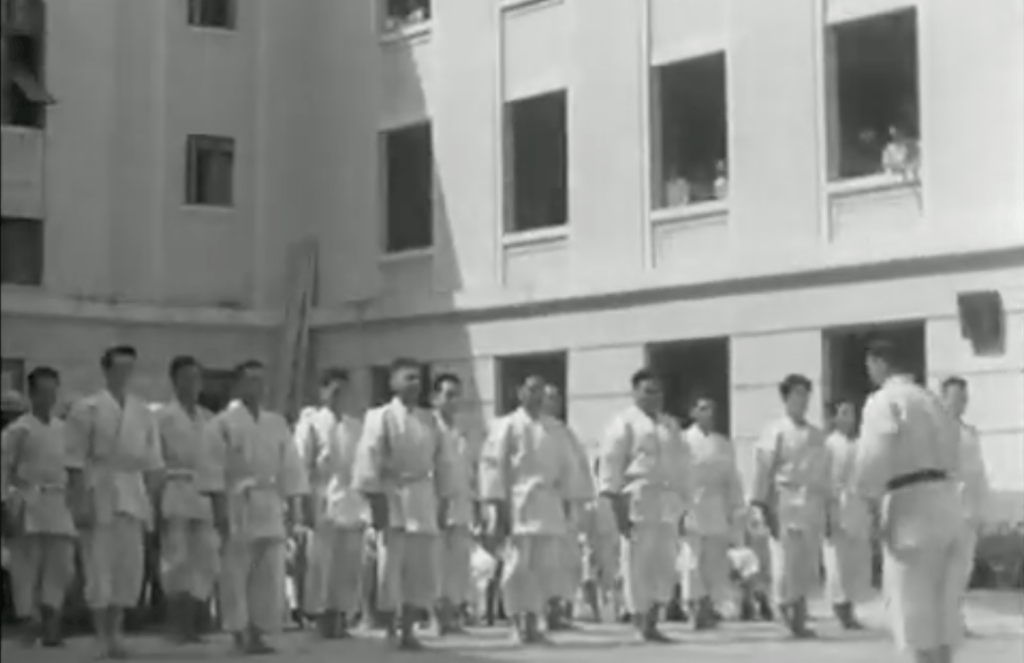
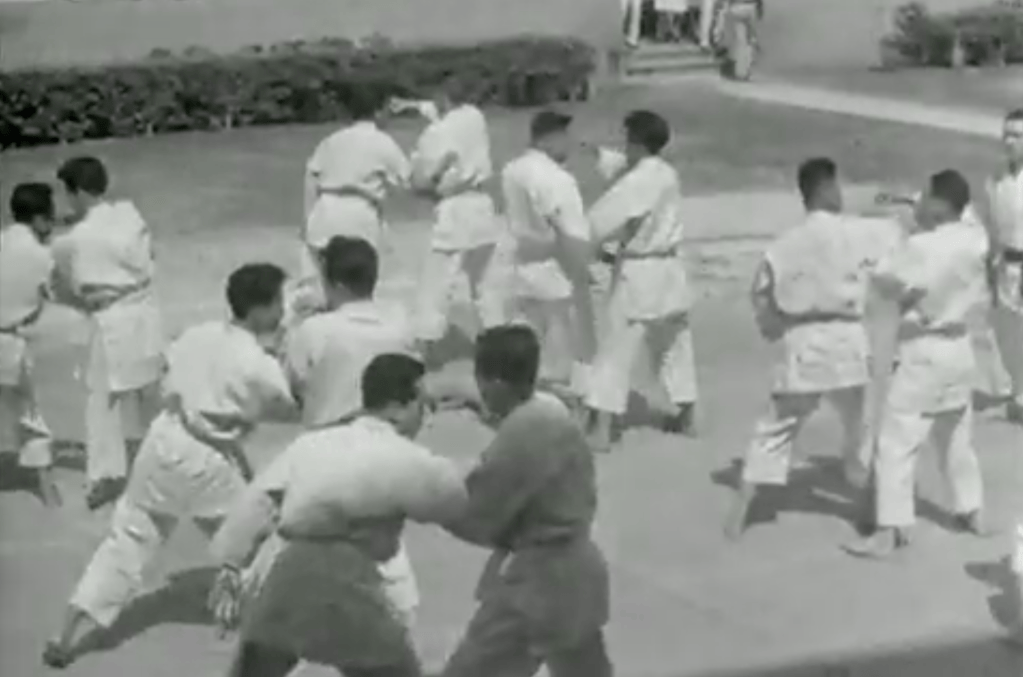
Images are screenshots from the clip (NHK Archives)
The NHK Archives where the clip is hosted are a treasure trove of historical film footage, much of which is freely available online. A newsreel dated 11 August 1952, designated “Day of Encouragement” (ガンバレの日 ganbare no hi), shows young men (probably university students), bare-chested and wearing ordinary street shoes, practising karate techniques such as gedan-barai (low-level sweeping block). They advance in zenkutsu-dachi (front stance) while executing oi-zuki (lunge punch). Although they do not appear to be experienced practitioners, they perform the movements with considerable enthusiasm.
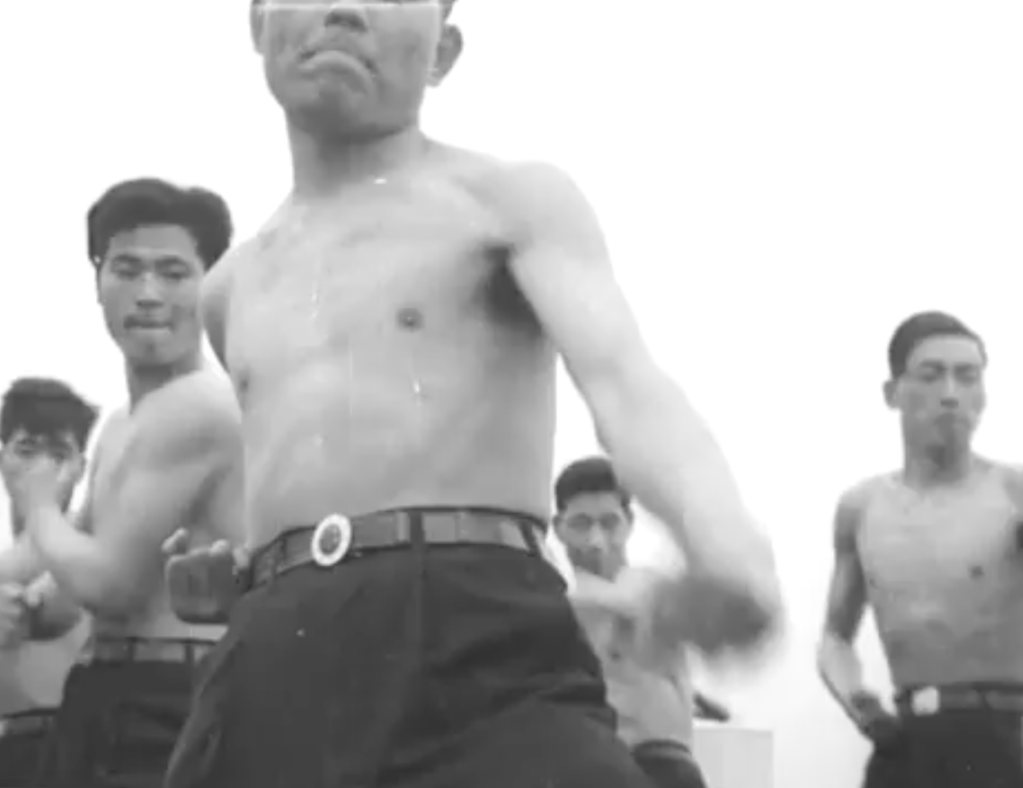
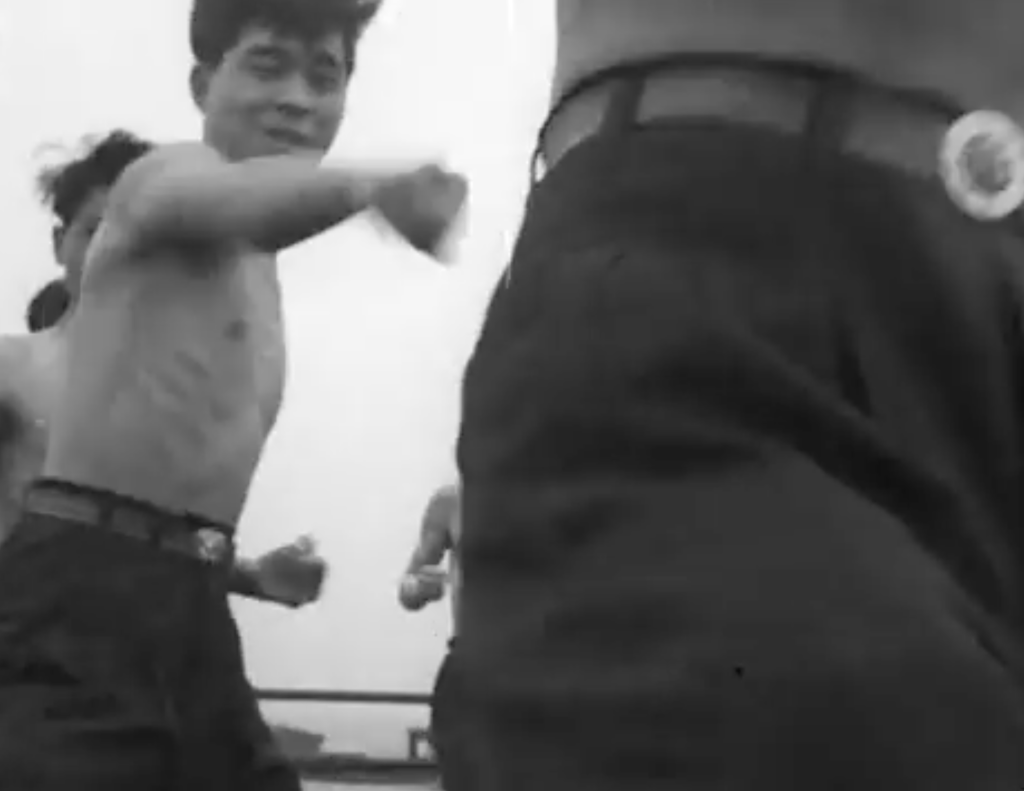
Images are screenshots from the clip (NHK Archives)


