-
A talk on the connections between Kanō Jigorō and Funakoshi Gichin
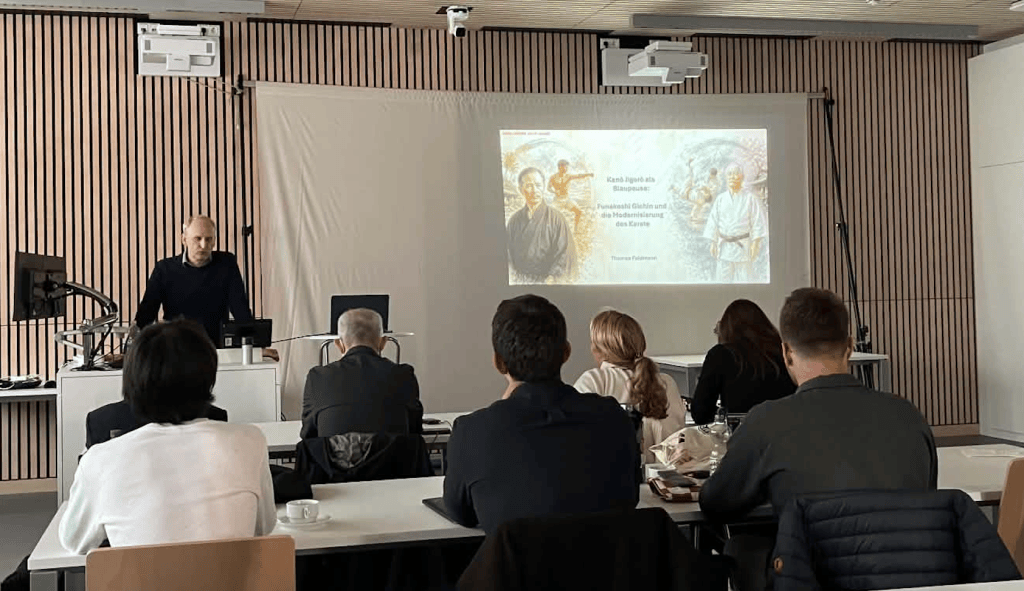
On 9 October 2026, I gave a presentation at the 12th German-Japanese Sport Science Symposium at Ludwigsburg University of Education. The symposium brought together researchers from Germany, Japan, France and the United States. My talk, “Kanō Jigorō as a Blueprint: Funakoshi Gichin and the Modernisation of Karate”, explored selected parallels between the two men’s approaches… Continue reading
-
Tai Chi Karate: Essays on lifelong martial arts practice
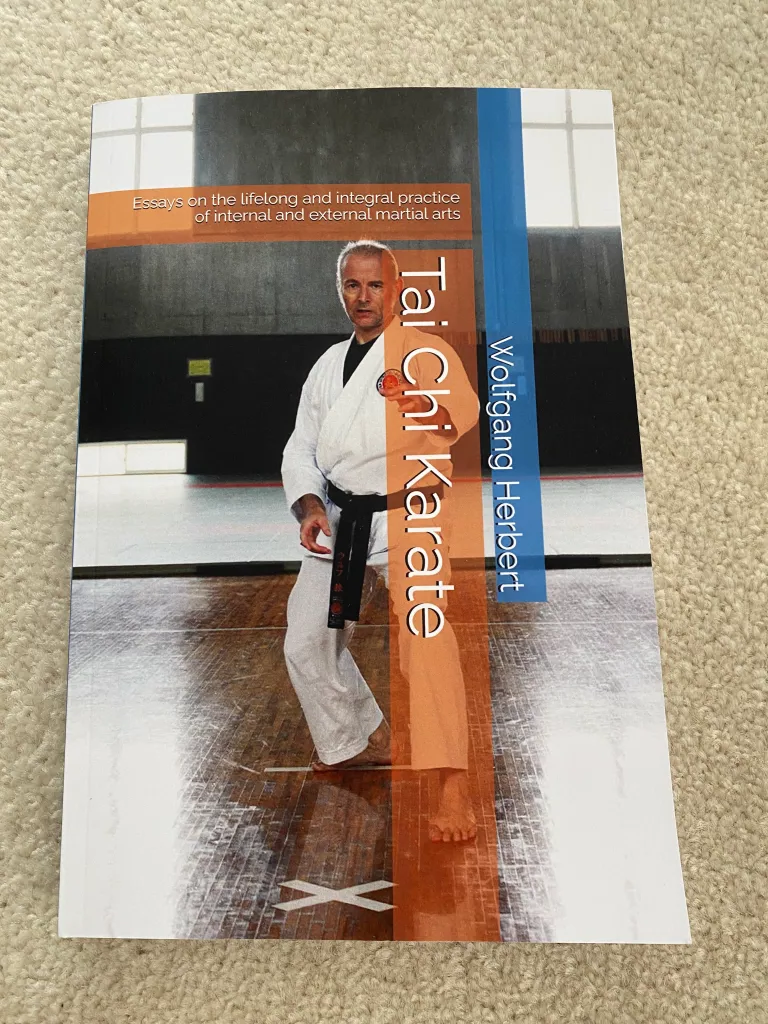
Wolfgang Herbert’s Tai Chi Karate: Essays on the lifelong and integral practice of internal and external martial arts continues the exploration begun in From Shaolin to Shotokan (2025). Combining autobiographical reflection, practical proposals, cultural criticism and historical discussion, the volume approaches karate as a transcultural practice whose physical, mental and spiritual dimensions deserve sustained attention.… Continue reading
-
Wartime jūdō on film: A glimpse of atemi-waza
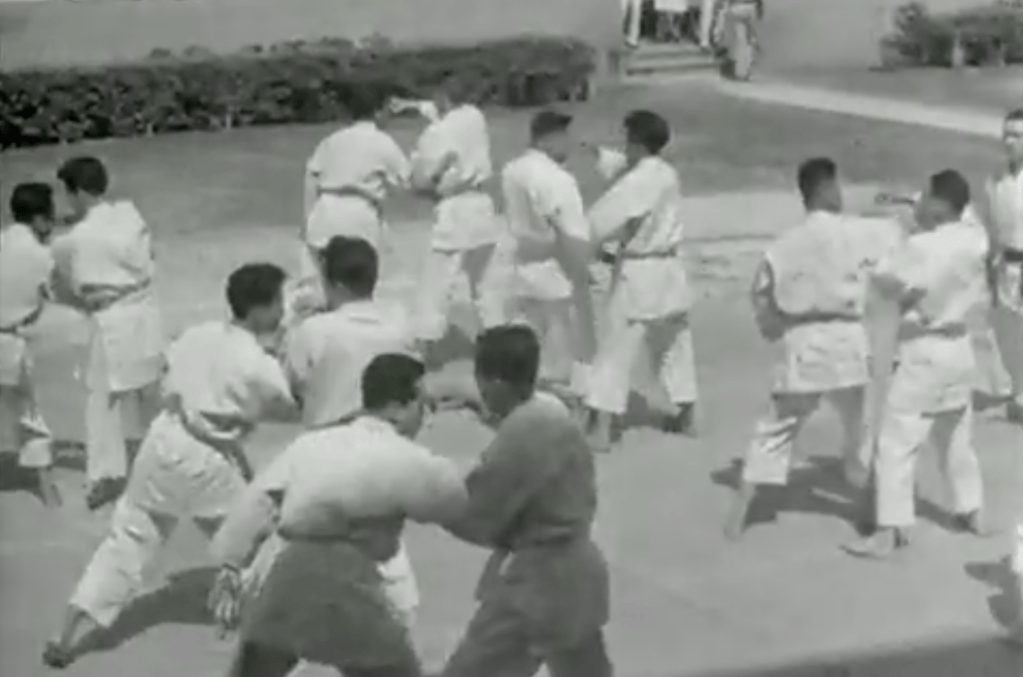
I had previously written about a possible connection between karate and jūdō. The point was that Kanō Jigorō (1860–1938) probably adapted techniques from karate into his system. Recently, I came across a clip from a Japanese newsreel (日本ニュース No. 149, 13 April 1943) that features such a technique in a very brief scene (at 04:46).… Continue reading
-
Unknown testimonial by Gima Makoto (1983)
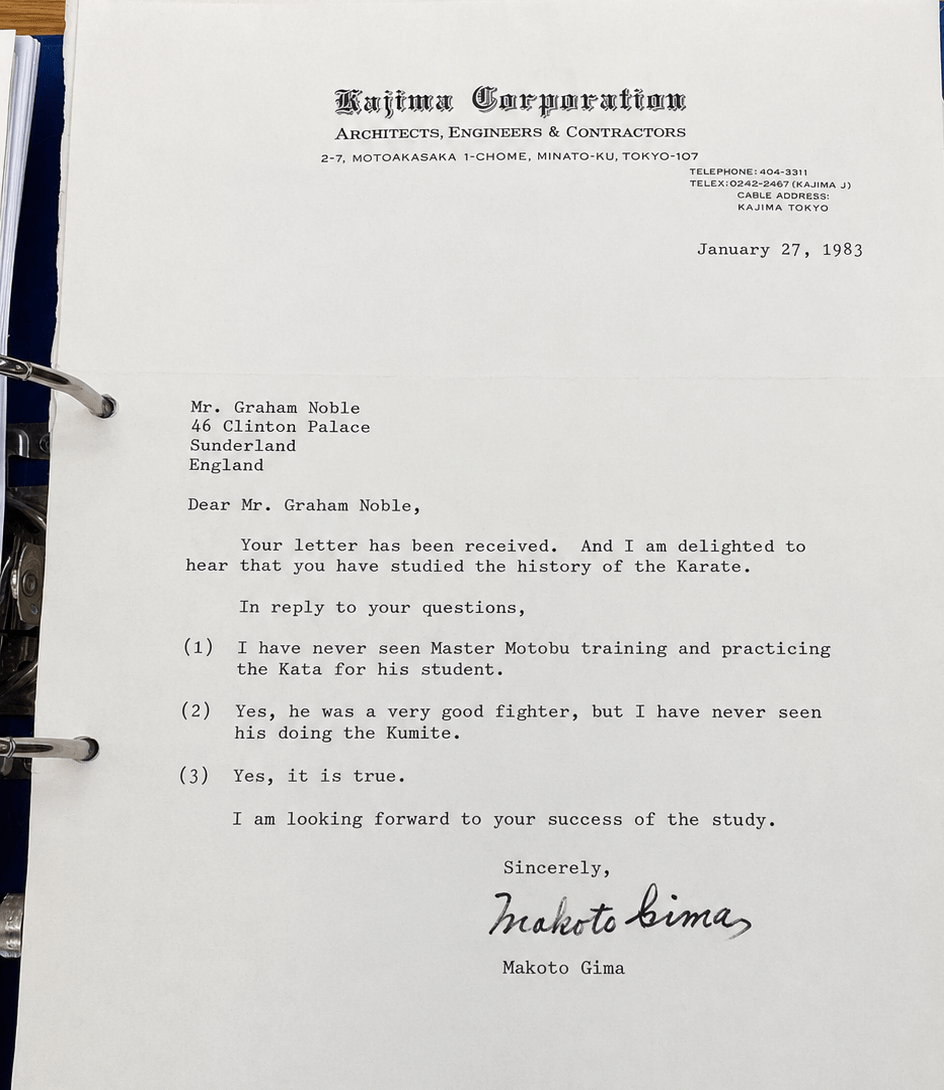
Gima Makoto (儀間真謹, 1896–1989) is one of the most important eyewitnesses to the early development of karate on the Japanese mainland. He is best known for assisting Funakoshi Gichin (1868–1957) during the historic karate demonstration at the Kōdōkan in Tōkyō in 1922. On that occasion, Funakoshi performed the kata Kūsankū, while Gima demonstrated Naihanchi. Funakoshi… Continue reading
-
The Okinawan Years of a Karate Pioneer – Interview with author James M. Hatch
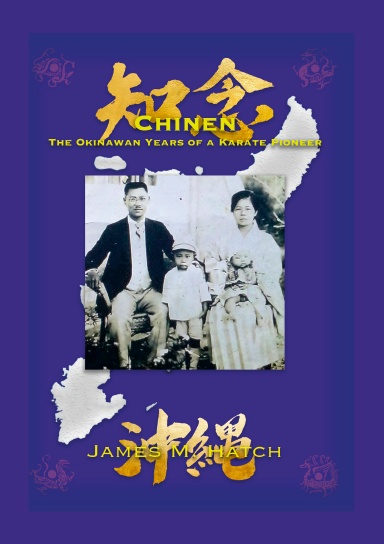
I am delighted to share an interview with James M. Hatch. After many years of research, James published a book in early 2025 on Chitose Tsuyoshi (千歳 剛直, 1898–1984), an influential figure in Okinawan karate who later taught and promoted the art on the Japanese mainland: Chinen: The Okinawan Years of a Karate Pioneer (Lulu,… Continue reading
-
Sakamoto Manshichi and the documentation of pre-war karate
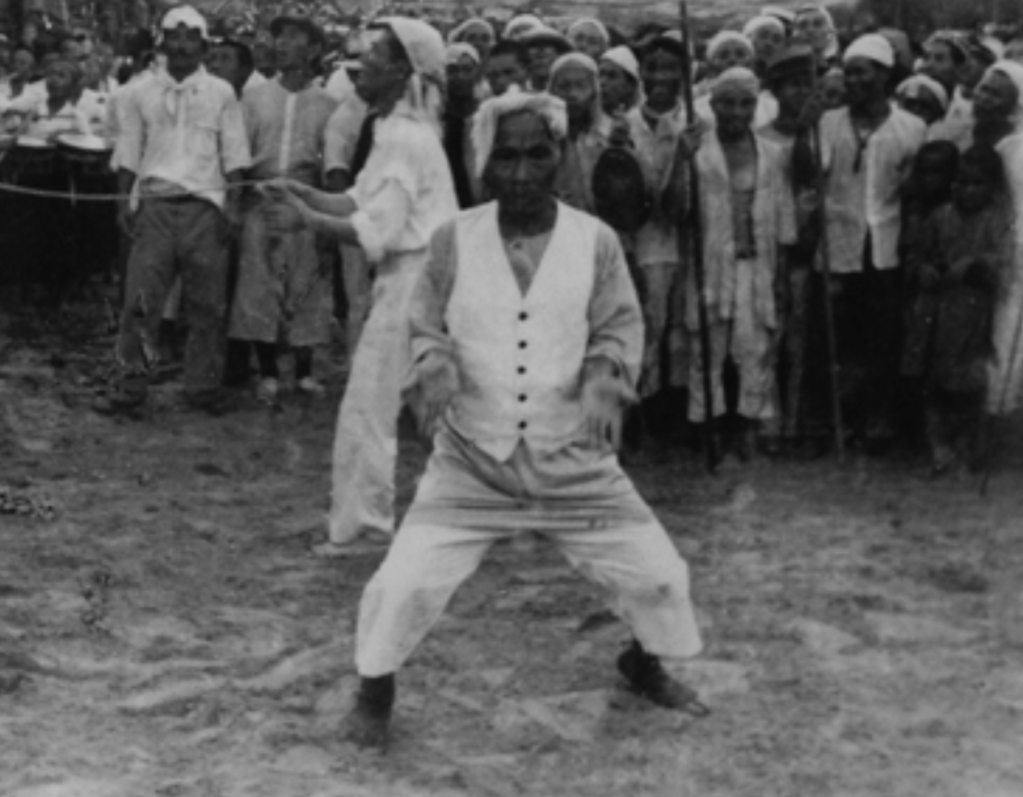
Sakamoto Manshichi (坂本万七, 1900–1974) was a distinguished Japanese photographer from Hiroshima Prefecture whose work is closely associated with ethnographic documentation. He developed a particular sensitivity for capturing folk crafts and Buddhist statuary—subjects that required both technical precision and an eye for cultural nuance. In 1939, Sakamoto joined the research group led by Yanagi Muneyoshi (柳 宗悦, 1889–1961),… Continue reading
-
Kicks in pre-Columbian fighting arts
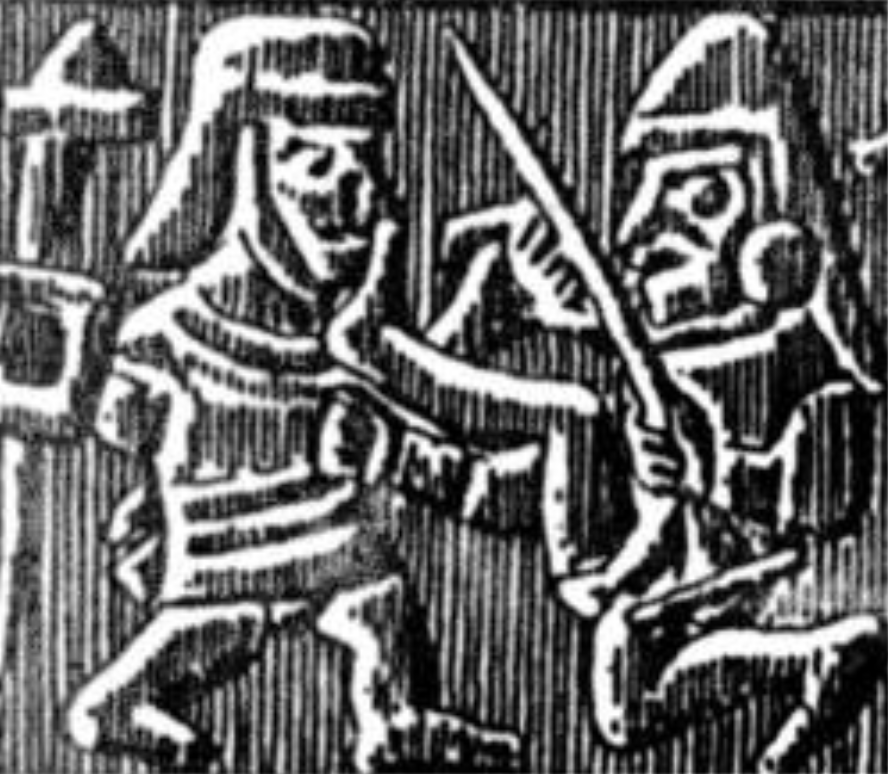
In 2005, I wrote a short piece on martial arts in pre-Columbian South America. It was written in response to a discovery by Agustín Seguí (1949–2023), who taught at Saarland University and headed the Spanish Department at the Institute of Applied Linguistics there. In 2003, he was the first to publish on what he described… Continue reading
-
The 1927 photograph and the early misidentification of karate in Europe
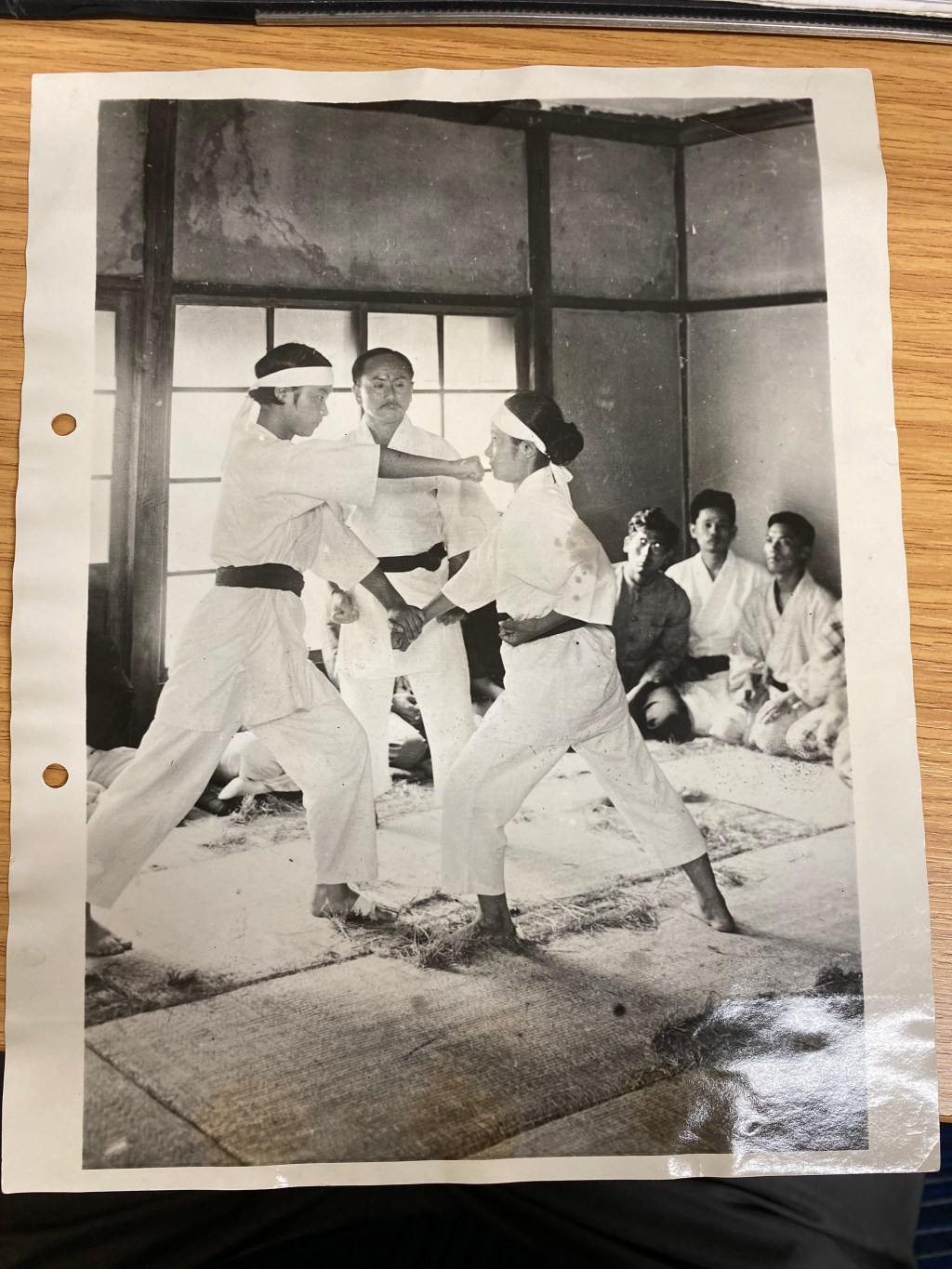
Knowledge about karate outside Japan before the end of the Second World War was extremely limited. Apart from a few early mentions in Western publications—such as those by Ernest Satow in 1872/3 and William Furness in 1899—information about the art remained scarce. There were, however, occasional points of contact. Overseas Okinawan communities, for example in… Continue reading
-
Investigations, Volume 2 available now
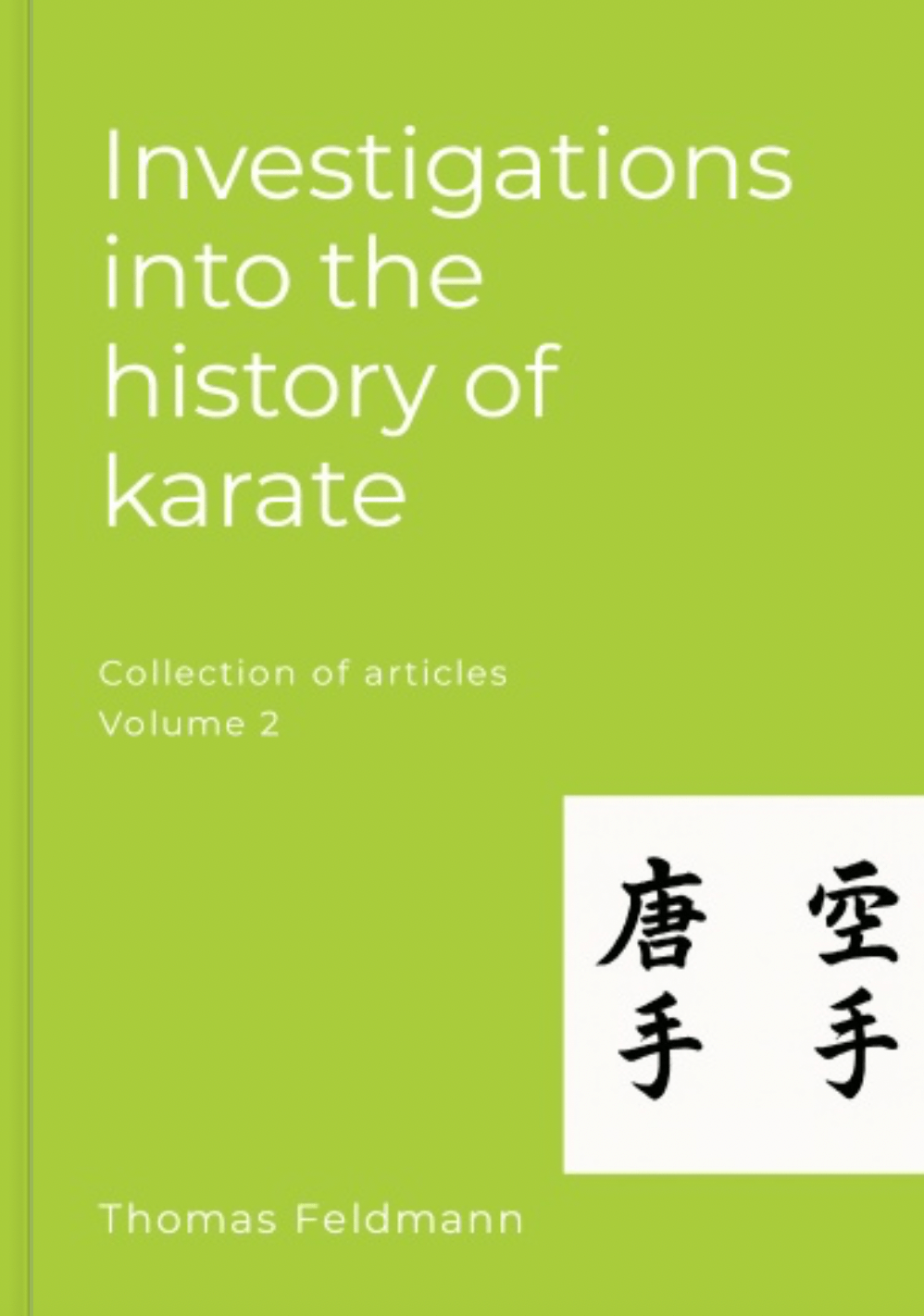
Volume 2 of “Investigations into the history of karate” is available now. Based on this blog, the book traces a range of historical contexts in which karate surfaces, from everyday settings such as plantations in Hawaiʻi around 1900 and personal diary entries from the early twentieth century. Other contributions draw on visual and textual sources,… Continue reading
-
Book about Izumikawa karate lineage published
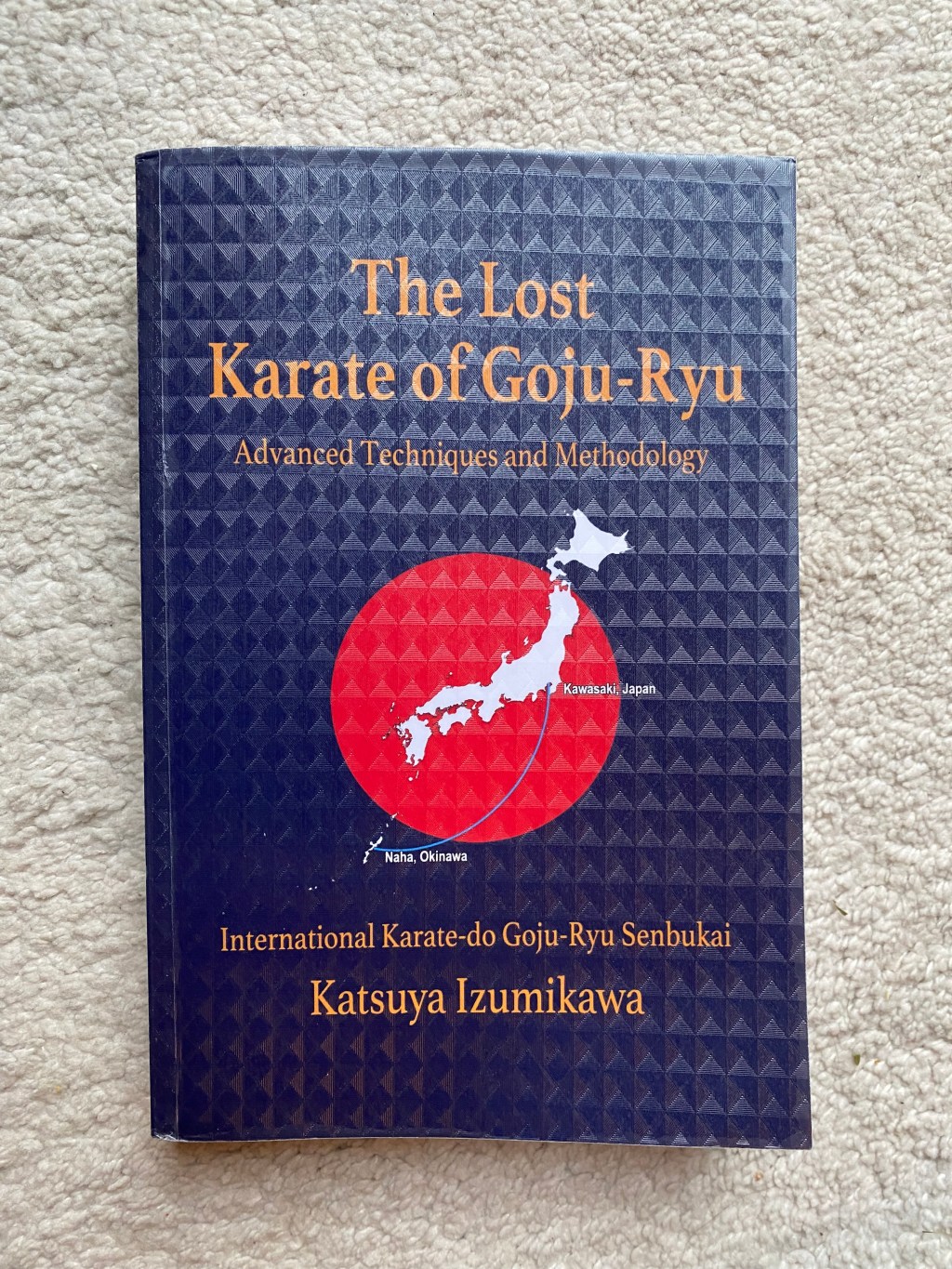
Last week, I received a personal copy of The Lost Karate Goju-ryū: Advanced Techniques and Methodology by Izumikawa Katsuya 泉川勝也. Izumikawa is the son of Izumikawa Kanki 泉川寛喜 (1908– 1967), the founder of Senbukai, who relocated from Okinawa to the Japanese mainland and established his dōjō in Kawasaki in 1939—the first Goju-ryū school on the… Continue reading
-
Subscribe
Subscribed
Have a WordPress.com account? Log in now.

